Crypto Journalist
Amin Ayan
Crypto Journalist

Share

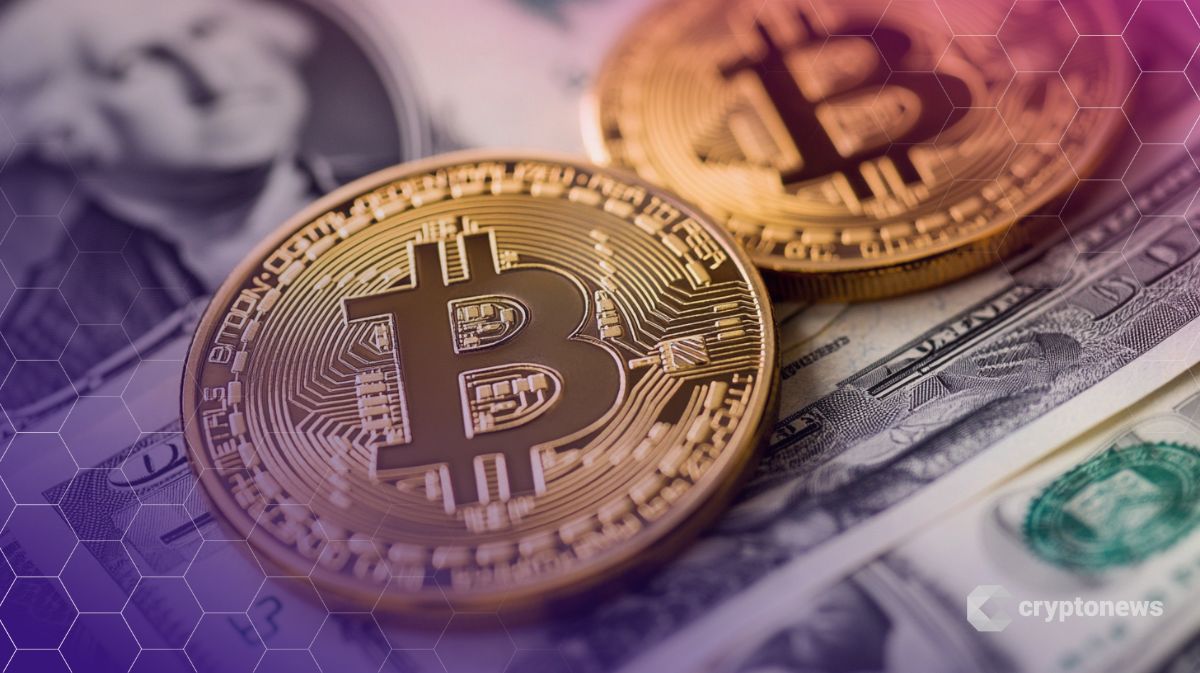
Coinbase CEO Brian Armstrong says Bitcoin plays a constructive role in the global financial system by applying pressure on US policymakers to maintain fiscal discipline, arguing that the asset ultimately supports the dollar’s long-term standing.
Key Takeaways:
- Armstrong says Bitcoin helps keep US fiscal policy in check.
- He warns inflation without growth could weaken the dollar’s reserve status.
- Rising debt is pushing investors toward Bitcoin and gold.
Speaking on the Tetragrammaton podcast with Rick Rubin, Armstrong said Bitcoin offers an alternative when confidence in traditional monetary policy weakens.
“Bitcoin provides a check and balance on the dollar,” he said, pointing to periods of rising deficits or inflation when investors may seek refuge outside fiat currencies.
Armstrong Warns Inflation Without Growth Could Cost Dollar Its Reserve Status
Armstrong added that moderate inflation can be manageable if matched by economic growth, but warned that persistent imbalances could carry serious consequences.
“If inflation outstrips growth, you’ll eventually lose reserve currency status,” he said, describing such an outcome as a severe blow to the United States.
In Armstrong’s view, Bitcoin’s existence indirectly restrains policy missteps by signaling that capital has alternatives.
That dynamic, he argued, incentivizes central banks and regulators to protect confidence in the US economy. “In a strange way, Bitcoin is helping extend the American experiment,” he said.
The comments come as fiscal pressures intensify. US national debt has climbed to roughly $37.65 trillion and is increasing by more than $70,000 per second, according to data from the US Congress Joint Economic Committee.
The scale and pace of borrowing have reignited debate over long-term dollar stability and the role of hard assets during periods of monetary strain.
Market behavior has reflected those concerns. In October, JPMorgan framed Bitcoin and gold as part of a “debasement trade” amid rising uncertainty around the dollar.
Bitcoin surged to a peak above $126,000 before pulling back roughly 30%, while gold continued to set new highs, underscoring diverging investor preferences.
Washington has also taken tentative steps toward integrating Bitcoin into its financial framework.
In March, the Trump administration signed an executive order establishing a Strategic Bitcoin Reserve, though it currently consists only of seized assets.
The proposed Bitcoin Act of 2025, which would formalize the reserve, remains in early stages in Congress.
Stablecoins, Not Bitcoin, May Do More to Extend Dollar Dominance
However, some industry figures argue that stablecoins may be more effective at reinforcing dollar dominance than Bitcoin itself.
Polygon Foundation CEO Sandeep Nailwal has said dollar-backed stablecoins are driving demand for US debt while expanding the dollar’s reach globally.
“Dollarisation 2.0 is happening in real time,” he said, pointing to adoption across Latin America and Africa.
The regulatory groundwork is already forming. The US passed the GENIUS Act in July, establishing one of the most comprehensive frameworks for stablecoins to date.
Looking ahead to 2026, the industry remains divided. Strategy CEO Phong Le has argued that Bitcoin’s underlying fundamentals held up throughout 2025 despite weaker prices, while Bitwise chief investment officer Matt Hougan said earlier this year that he expects 2026 to be an “up year” for the asset.
According to Linh Tran, market analyst at XS.com, Bitcoin’s recent price action underscores the market’s sensitivity to monetary policy expectations rather than headline economic data.