Crypto Journalist
Amin Ayan
Crypto Journalist

Share


Abra CEO Bill Barhydt believes Bitcoin could benefit in 2026 as easing monetary policy injects fresh liquidity into global markets, reviving risk appetite after a prolonged period of tight financial conditions.
Key Takeaways:
- Fed bond buying and lower rates could support Bitcoin in 2026.
- Clearer regulation and institutional demand remain long-term tailwinds.
- Gains are likely to be steadier, with fewer sharp rallies.
Speaking on Schwab Network, Barhydt said the U.S. central bank is already laying the groundwork for looser policy.
He pointed to early signs of renewed balance sheet support, describing the current environment as “quantitative easing light,” with the Federal Reserve stepping in to support demand for government debt.
Fed Bond Buying, Falling Rates Could Lift Bitcoin in 2026
“We are seeing the Fed start to buy its own bonds,” Barhydt said. “Next year, demand for government debt is likely to fall alongside lower interest rates. That combination tends to be positive for all assets, including Bitcoin.”
Beyond liquidity, Barhydt brought up regulatory clarity in the U.S. and rising institutional participation as tailwinds that could extend Bitcoin’s upside beyond a single cycle.
In his view, lower rates paired with clearer rules could set the stage for several strong years across the digital asset market.
Market expectations, however, suggest policymakers remain cautious in the near term. Data from the CME Group shows that just 14.9% of traders expect an interest rate cut at the January Federal Open Market Committee meeting, down from 23% in November, indicating that rate relief may take time to materialize.
Last week, Bitwise chief investment officer Matt Hougan also said Bitcoin is likely to deliver steady gains over the next decade, but investors should not expect the kind of explosive year-on-year rallies seen in earlier cycles.
Hougan described Bitcoin’s outlook as a prolonged upward trend marked by lower volatility and more measured returns.
“I think we’re in a 10-year grind upward of strong returns,” he said. “It’s not spectacular returns, [but] strong returns, lower volatility, some up and down.”
Bitcoin Seen Entering Accumulation Phase in Early 2026
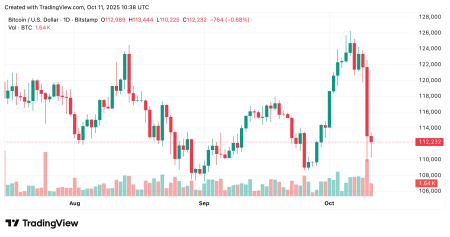
Meanwhile, analyst Linh Tran believes Bitcoin entered a corrective phase in late 2025 after peaking near $126,000 and falling roughly 35% to around $80,000.
In a note shared with Cryptonews.com, she said this pullback reflects a structural shift in the market, with Bitcoin now driven less by retail speculation and more by macroeconomic conditions, institutional flows, and regulatory developments.
As a result, the outlook for Q1 2026 depends more on fundamentals than cyclical hype.
High interest rates remain a key constraint. With U.S. rates still in the 3.5%–3.75% range and expectations for easing pushed into the second half of 2026, liquidity conditions are unlikely to support a strong rally in early 2026.
“When liquidity conditions have not yet improved materially, Bitcoin is unlikely to enter a strong growth phase driven purely by macro factors. Instead, the current monetary environment may keep the cryptocurrency trading in a cautious and stable manner,” Tran said.
While spot Bitcoin ETFs hold more than $110 billion in assets, flows have become uneven, suggesting institutions are reallocating selectively rather than aggressively increasing exposure.