Israel is to revoke the licences of 37 international non-governmental organisations (INGOs) working in Gaza and the occupied West Bank, saying they failed to meet requirements under new registration rules.
ActionAid, International Rescue Committee, Médecins Sans Frontières and Norwegian Refugee Council are among the aid agencies which will have their licences suspended on 1 January, with their operations to end within 60 days.
Israel said they had, among other things, failed to hand over “complete” personal details of their staff. The INGOs said that could put them at risk.
The move was condemned by 10 countries, which said the rules would have a severe impact on access to essential services.
In a joint statement, the foreign ministers of the UK, France, Canada, Denmark, Finland, Iceland, Japan, Norway, Sweden and Switzerland said INGOs were integral to the humanitarian response in Gaza and that any attempt to stem their ability to operate was “unacceptable”.
“Without them, it will be impossible to meet all urgent needs at the scale required,” they warned.
The European Union’s humanitarian chief, Hadja Lahbib, said: “Israel’s plans to block INGOs in Gaza means blocking life-saving aid.”
International humanitarian law “leaves no room for doubt: aid must reach those in need,” she added.
UN human rights chief Volker Türk called the INGO suspensions “outrageous” and “arbitrary”, and said they made “an already intolerable situation even worse for the people of Gaza”.
The Humanitarian Country Team of the Occupied Palestinian Territory – a forum that brings together UN agencies and more than 200 local and international NGOs – urged the Israeli authorities to reconsider the registration decisions.
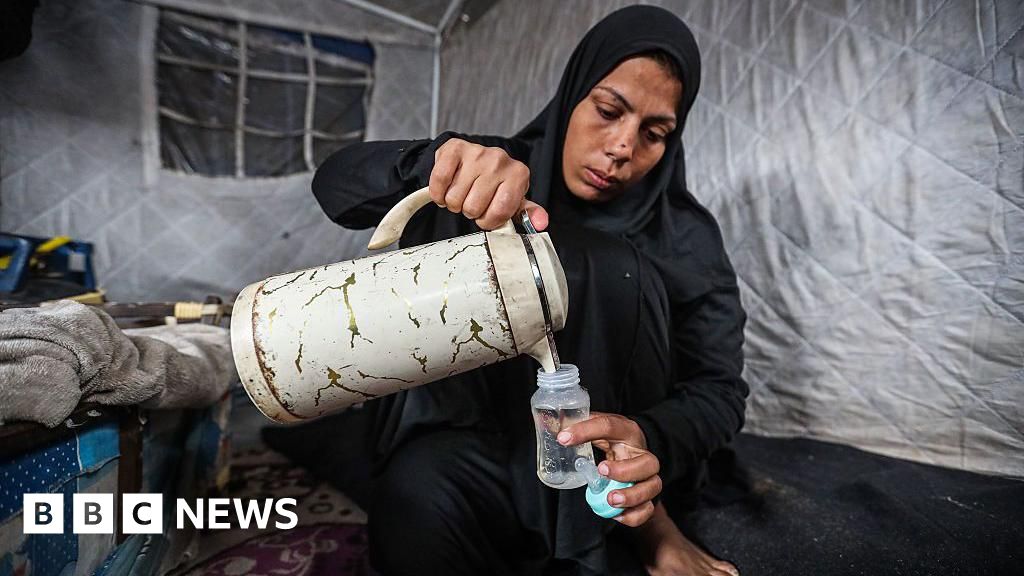
It has said INGOs run or support most of Gaza’s field hospitals and primary healthcare centres, emergency shelter responses, water and sanitation services, nutrition stabilisation centres for children with acute malnutrition, and critical mine action activities.
Israel’s ministry of diaspora affairs, which oversees registration applications, said the new measures would not affect the flow of humanitarian assistance to Gaza.
It said aid continued to be delivered through “approved and vetted channels”, including UN agencies, bilateral partners, and humanitarian organisations.
Israeli military body Cogat, which controls Gaza’s crossings and co-ordinates aid deliveries, meanwhile said the INGOs facing suspension “did not bring aid into Gaza throughout the current ceasefire”, which began 11 weeks ago. It added that “even in the past their combined contribution amounted to only about 1% of the total aid volume”.
The diaspora affairs ministry said the primary reason INGOs had their licences revoked was “the refusal to provide complete and verifiable information regarding their employees,” which it said was critical to preventing “the infiltration of terrorist operatives into humanitarian structures”.
Fewer than 15% of the INGOs providing humanitarian assistance to Gaza were found to be in violation of the new regulatory framework, it added.
That framework includes several grounds for rejection, including:
- Denying the existence of Israel as a Jewish and democratic state
- Denying the Holocaust or the Hamas-led attacks on Israel on 7 October 2023
- Supporting an armed struggle against Israel by an enemy state or terrorist organisation
- Promoting “delegitimisation campaigns” against Israel
- Calling for a boycott of Israel or committing to participate in one
- Supporting the prosecution of Israeli security forces in foreign or international courts
The ministry of diaspora affairs also alleged that Israeli investigations had “determined that individuals affiliated with [Médecins Sans Frontières] were linked to terrorist organisations, including the Palestinian Islamic Jihad and Hamas”, without providing any evidence.
“Despite repeated requests, the organisation failed to provide full disclosure regarding the identities and roles of these individuals,” it said.
MSF said it took such allegations extremely seriously and that it would “never knowingly employ people engaging in military activity”.
“Any employee who engages in military activity would pose a danger to our staff and our patients. Publicly making such claims without substantiated evidence puts humanitarian staff at risk and undermines life-saving medical work,” it added.
MSF also warned that deregistration by Israeli authorities would effectively block it from operating in Gaza, “where we support one in five hospital beds and one in three births, cutting off life-saving medical assistance for hundreds of thousands of people”.
Norwegian Refugee Council spokeswoman Shaina Low told NPR that it would no longer be able to bring foreign aid workers into Gaza if it was deregistered, but that its 200 local staff would continue to support communities as best as they could.
Ms Low said NRC had tried to explain to the Israeli authorities why it could not provide them with lists of their Palestinian staff members.
“We’ve seen that hundreds of aid workers were killed over the last two years. And so, for us, it is a safety concern for our staff. And acknowledging who they are – it puts them at risk. Because we’ve seen that aid workers are just as unprotected, and at times, have been targeted by Israeli authorities,” she said.
She also said that the NRC and other INGOs were prevented by data protection laws from complying with an Israeli demand to share details about the funding they received from the EU and EU member states.
“The number one thing that we’re concerned about is the entry of aid,” she added. “We continue to call for Israel to lift these restrictions, to open all of the crossings to allow much more aid to enter than the current rate.”
Israel says it is meeting its obligations in facilitating an increase in aid deliveries.
On 19 December, UN-backed food security experts said there had been improvements in nutrition and food supplies in Gaza since the ceasefire began, but that 100,000 people still experienced “catastrophic conditions” last month.
Other INGOs to be suspended include CARE, Medico International, and Medical Aid for Palestinians.
International Rescue Committee said it was in touch with relevant authorities and seeking a way to sustain the delivery of life-saving aid.
Bushra Khalidi, Oxfam’s policy lead, meanwhile said Cogat’s figures on aid deliveries by the affected INGOs were misleading because “humanitarian impact is not measured by percentages”.
“We are not simply aid volume contributors; we are core implementers. The UN relies on our staff, our partners, our technical expertise, our logistics, and our community networks to deliver assistance,” she explained.
The Humanitarian Country Team of the Occupied Palestinian Territory – a forum that brings together UN agencies and more than 200 local and international NGOs – urged the Israeli authorities to reconsider the registration decisions.
Earlier this month, it complained that the new registration system relied on “vague, arbitrary, and highly politicised criteria and imposes requirements that humanitarian organisations cannot meet without violating international legal obligations or compromising core humanitarian principles”.
In a statement, Israel’s Minister of Diaspora Affairs and Combating Antisemitism, Amichai Chikli, said: “The message is clear: humanitarian assistance is welcome – the exploitation of humanitarian frameworks for terrorism is not.”
The war in Gaza was triggered by the Hamas-led attack on southern Israel on 7 October 2023, in which about 1,200 people were killed and 251 others were taken hostage.
More than 71,260 people have been killed in Israeli attacks in Gaza since then, according to the territory’s Hamas-run health ministry.