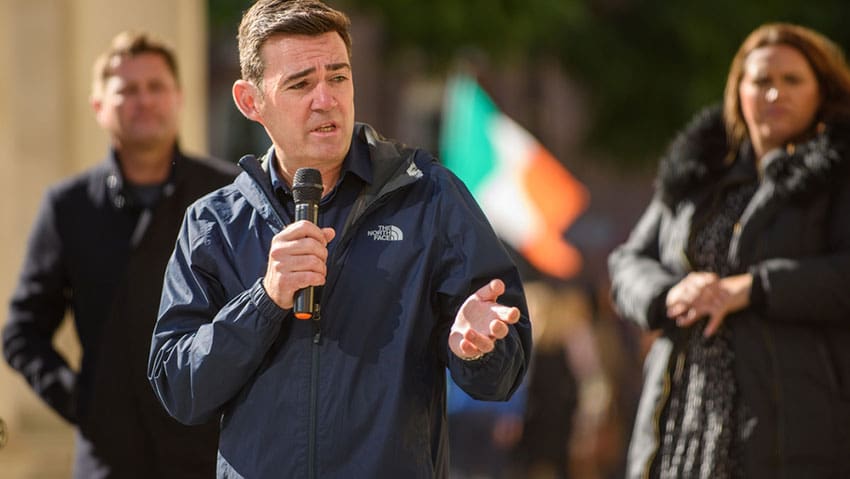
Andy Burnham, the man expected to walk into Downing Street later this month, has told business owners there is “some room” for movement on tax, signalling a rebalancing of the business rates system away from the high street and towards the vast warehouses of the online giants.
In his first broadcast interview since launching his bid to become prime minister, the newly elected Makerfield MP told LBC’s Andrew Marr that pubs, clubs and music venues would receive a 20 per cent cut in business rates under his plans, while smaller independent hospitality, leisure and retail firms would see the threshold for paying rates raised for the first time since 2017.
The cost, he said, would be met by higher levies on the giant distribution sheds operated by online retailers such as Amazon, alongside measures targeting the owners of empty high street properties, a formula that will be welcomed by the three pubs and restaurants closing every day under the weight of rising costs and tax increases.
Crucially for firms planning ahead of the autumn Budget, Burnham insisted he would honour Labour’s 2024 manifesto pledges not to raise VAT, income tax or national insurance. “I stick by the manifesto and the promises that it made,” he said. “So, let me be absolutely clear about that, but there is some room within that manifesto for movement on tax.”
The intervention comes at a delicate moment for the sector. From April 2026, the government replaced retail, hospitality and leisure relief with permanently lower business rates multipliers for qualifying properties, yet UKHospitality has warned that the 2026 revaluation still leaves many operators facing sharply higher bills. Any further relief funded by warehouse levies would mark a significant redistribution of the tax burden.
Burnham was also at pains to shore up his economic credibility, an issue that matters to the eight in ten SME owners who say they fear what a Burnham premiership would mean for their business. He has previously drawn criticism for suggesting the UK had “got to get beyond this thing of being in hock to the bond markets”, and some on the left of the Labour Party want borrowing rules relaxed to fund higher public spending.
Pressed on the point, Burnham insisted he would not be “indisciplined” with the public finances, pointing to Greater Manchester’s “rock solid” books during his time as mayor and his earlier stint as a Treasury minister in the last Labour government.
The bigger fiscal headache awaiting him is defence. Sir Keir Starmer this week announced a £15bn increase in defence spending without fully explaining where the money would come from, leaving whoever Burnham appoints as chancellor to find at least £4.7bn in savings from other departments at their first Budget this autumn.
“I wasn’t in all of the discussions, but to be fair, the government had had an internal process ongoing,” Burnham said. “What I can say to you tonight is I will take my responsibilities fully to fund the defence investment plan, if I am in the position to do so.”
Conservative leader Kemi Badenoch has accused Sir Keir of “leaving this mess to his successor” and argued the shortfall should be bridged by cutting the welfare bill rather than new taxes. Burnham, for his part, ruled out “crude cuts to benefit levels that just put people who are struggling in even worse poverty”, saying he would instead reduce the benefits bill through better technical education, work placements for 16 year olds and mental health support for those in work.
Burnham remains the only candidate to replace Sir Keir as Labour leader and is expected to become prime minister on 20 July. He has yet to name his chancellor, amid speculation the role could go to Ed Miliband, and his backing among parts of the sector is already building, with the night time industries body throwing its weight behind his push for a hospitality VAT cut.
For SME owners, the message from the presumptive prime minister is a familiar political balancing act: no movement on the big three taxes, but a clear signal that the way business property is taxed is about to change, with the high street the intended winner and the warehouse the intended payer.


