Buoyed by a new congressional map favoring their party, California Democrats were eyeing Tuesday’s primary elections as a critical first step toward flipping a handful of House seats and taking back power in Washington.
Results from California’s massive and slow-moving election process were not entirely clear late Tuesday, as polls closed and mail ballots continued to be processed and counted. Some of the most high-stakes races had yet to be called.
Still, Democrats were bullish about their chances of advancing candidates to November’s general election in all five districts that were redrawn in their favor as a result of last year’s Proposition 50 ballot measure.
“The path to winning back the House starts with voting in the June 2nd primary,” the California Democratic Party posted online Monday.
Meanwhile, California Republican Party Chairwoman Corrin Rankin urged Republican voters to make their own voices heard too.
“Like President Trump said, we need to make it too big to rig,” Rankin said on “The Benny Show.” “We need to swamp the vote.”
One of the most closely watched races was in the redrawn 22nd Congressional District in the Central Valley, where incumbent Rep. David Valadao (R-Hanford) is facing challenges from moderate Assemblymember Jasmeet Bains (D-Delano) and progressive college professor Randy Villegas.
Valadao had enough votes late Tuesday to advance to the November general election, according to the Associated Press, but it remained unclear who his challenger would be.
Another closely watched race was in the redrawn 48th Congressional District in San Diego and Riverside counties, where Rep. Darrell Issa (R-Bonsall) decided to retire rather than run for reelection, and where Republican San Diego County Supervisor Jim Desmond — who is endorsed by Trump — ran against a pack of Democrats.
Desmond advanced late Tuesday, as did Democratic challenger San Diego City Councilmember Marni von Wilpert, according to the Associated Press.
Proposition 50 — which Californians passed with nearly 65% of the vote a year ago — was California Democrats’ response to Texas Republicans redrawing their state’s congressional maps in the GOP’s favor, at President Trump’s behest. It was also the only major Democratic counterpunch in the wider mid-decade redistricting brawl that has spread across the country in the last year.
Experts expect the redistricting battle to deliver a net gain of a handful or more House seats to Republicans. But Democrats could gain even more ground given Trump’s lousy approval ratings and the long history of midterm election losses for the president’s party.
Combined, those factors make the battle for control of the House incredibly close, which in turn makes the five seats up for grabs in California pivotal — and potentially decisive.
Tuesday’s primaries won’t determine if any of those five seats will indeed flip parties in November. However, the primaries will define those head-to-head races to come and better inform the odds of Democrats toppling Republican incumbents, experts said.
In addition to flipping the seats currently held by Valadao and Issa, Democrats are hoping to pick up three additional seats.
In the 1st Congressional District — which after Proposition 50 lost rural reaches of northeast California and picked up liberal North Bay communities — various candidates were vying for the seat long held by the late Rep. Doug LaMalfa (R-Richvale), who died in January. The two to secure enough votes Tuesday to advance to November, according to the Associated Press, were Democratic state Sen. Mike McGuire and Republican Assemblymember James Gallagher, who is endorsed by Trump.
Voters from the existing district also voted in a special election Tuesday to fill the remainder of LaMalfa’s term, electing Gallagher to the position outright with more than 50% of the vote, according to the Associated Press.
In the 3rd Congressional District, which lost an eastern rural stretch along Nevada and now holds more tightly to the Sacramento suburbs, Rep. Ami Bera (D-Elk Grove) — who currently represents a different district — is running to remain in Congress in a new seat.
Bera advanced Tuesday, along with Republican Nevada County Supervisor Robb Tucker, according to the Associated Press.
Meanwhile, the 3rd Congressional District’s incumbent, Rep. Kevin Kiley (I-Rocklin), is seeking to do the opposite. He quit the Republican Party, became an independent and is now running for Bera’s current seat in Congressional District 6, which includes the city of Sacramento and Placer County suburbs.
The Associated Press also had not made any calls in that race as of late Tuesday.
In the 41st Congressional District, which became more liberal after Proposition 50 by losing voters in Riverside County and gaining them in Los Angeles County, a slate of candidates — including Rep. Linda Sánchez (D-Whittier), who currently represents a different district — ran to replace Rep. Ken Calvert (R-Corona). Calvert, a 17-term incumbent, decided to run in the neighboring 40th Congressional District instead.
Sánchez advanced Tuesday, as did Republican Mitch Clemmons, according to the Associated Press.
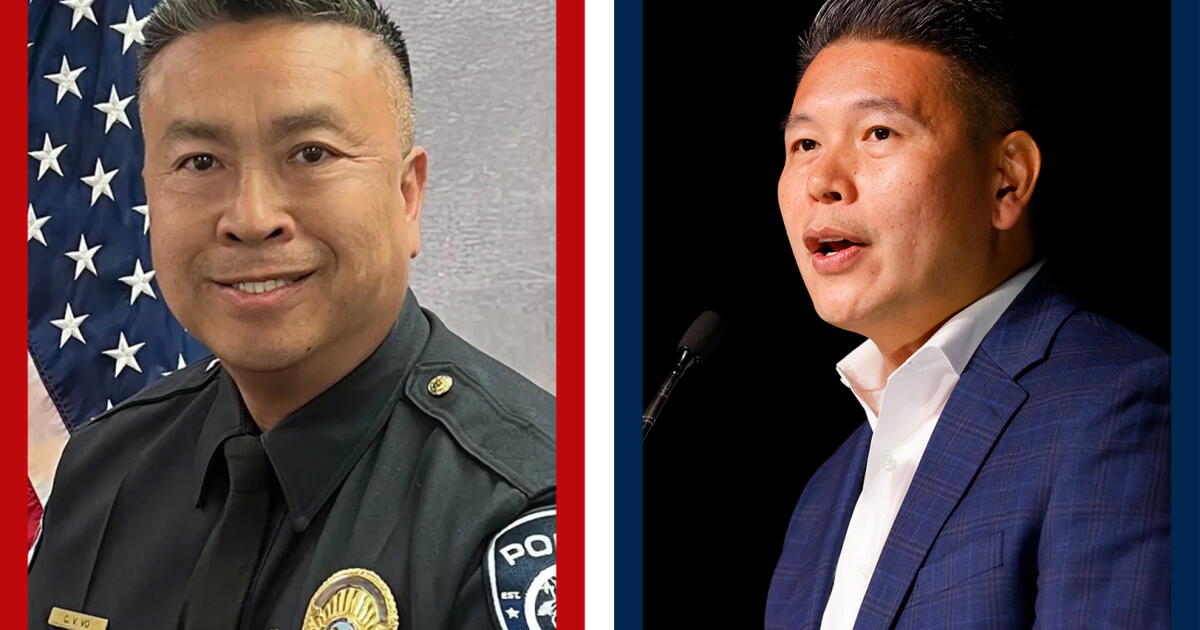
In the 40th Congressional District, which covers a swath of inland Orange County and portions of San Bernardino and Riverside counties, incumbent Rep. Young Kim (R-Anaheim Hills) is now going head-to-head with Calvert, while also facing several Democratic challengers. Calvert advanced Tuesday, but the Associated Press had not made a call on anyone else in the race.
Other districts that were not part of the Proposition 50 shuffle are also attracting attention.
In the 11th Congressional District in San Francisco, several Democratic candidates are vying to replace Rep. Nancy Pelosi (D-San Francisco), the retiring former House speaker, including state Sen. Scott Wiener; tech millionaire and Democratic political operative Saikat Chakrabarti; and Connie Chan, a member of the San Francisco Board of Supervisors whom Pelosi endorsed.
Wiener advanced Tuesday, according to the Associated Press. It had not made a call on anyone else.
Democrats are also closely watching several races where younger Democrats and progressives are challenging older incumbent Democrats, and where newer Democratic incumbents are seeking to hold on to their seats in relatively competitive districts.
Among the older incumbents, Rep. Brad Sherman (D-Sherman Oaks) had enough votes to advance to November, alongside Republican challenger Larry Thompson, according to the Associated Press. Rep. Mike Thompson (D-St. Helena) also had enough votes to advance, though it was unclear whom he would face in November.
The Associated Press had not made any calls as of late Tuesday night in the race for the seat of incumbent Rep. Doris Matsui (D-Sacramento), though Matsui put out a statement saying she had advanced and was confident of winning in November.
Newer incumbents with enough votes to advance to November included Reps. Adam Gray (D-Merced), Derek Tran (D-Orange) and George Whitesides (D-Agua Dulce), according to the Associated Press.
Advancing against Whitesides was Republican Santa Clarita Councilmember Jason Gibbs, according to the Associated Press. It remained unclear who would advance alongside Gray and Tran.