Under the EU treaties and the bloc’s established institutional practice, there is a sharp distinction between membership and partnership. The EU has close relationships with many non-member countries, but only its 27 members have a seat in the bloc’s core political institutions and a formal role in making EU law.
A new model of membership “would actually require a treaty change,” German Socialists and Democrats MEP René Repasi told POLITICO.
The lack of wide consultation was visible inside the Commission, too, with an official involved in enlargement telling POLITICO their team had not been involved in any discussions about the proposal and that they knew nothing about it.
In the hallways of the Parliament, the proposal drew mixed reactions. “No one was aware of this special membership granted to Canada,” right-wing ECR co-chair Nicola Procaccini told POLITICO, adding it’s “not entirely clear what this membership actually entails” but that the United Kingdom should be the first to benefit from such an arrangement.
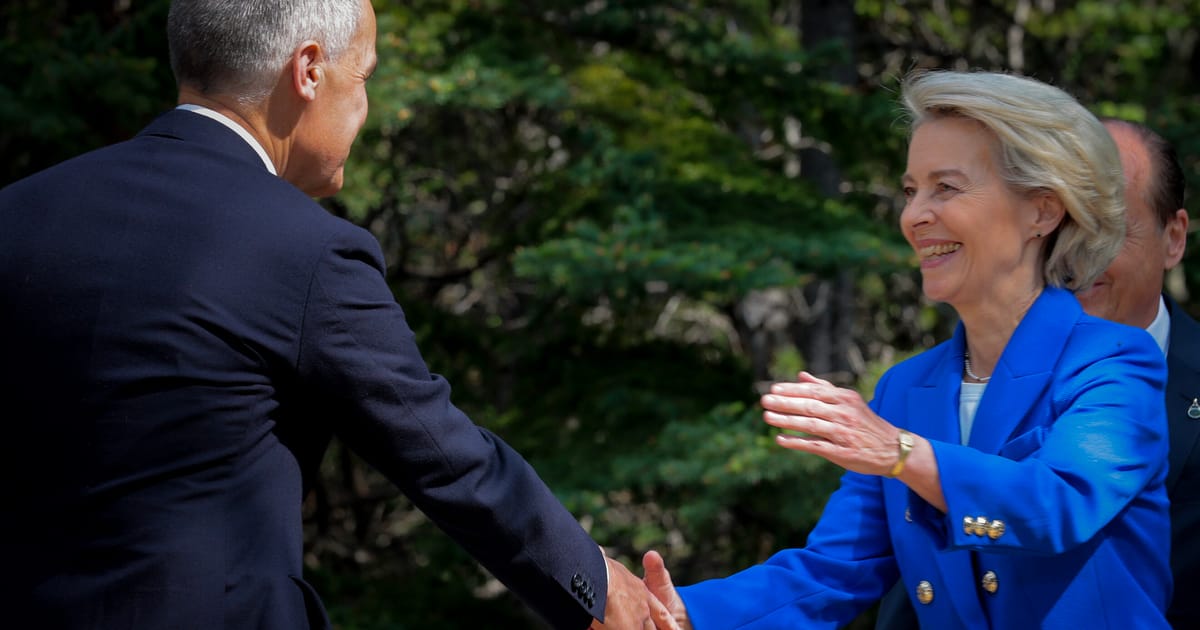
Von der Leyen’s announcement should be read as a branding exercise to package a set of deeper ties across certain sectors that Canadians seek, as there is no legal basis in the treaties for such membership status, argued two centrist MEPs and one Parliament official.
European Parliament President Roberta Metsola’s office put out a statement following a meeting with Carney that, tellingly, avoided mentioning the topic at all, saying the two leaders talked about “areas with big potential for even closer cooperation,” from critical raw minerals to defense.