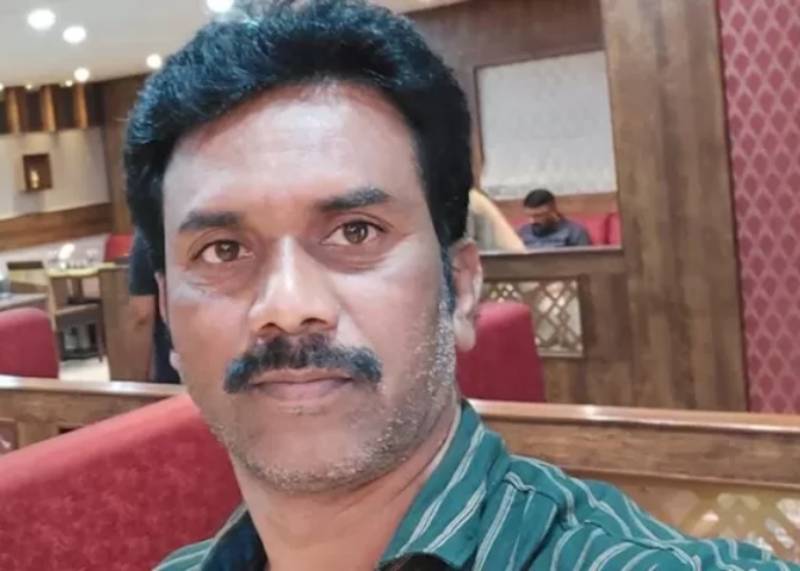
Filipino journalist Nestor Micator became the third media worker killed in the Philippines this year, renewing concern over deadly attacks on radio broadcasters and unresolved press killings.
The Press Emblem Campaign condemned the murder of Micator, a radio news anchor and commentator in the southern Philippines, and called for a credible investigation.
Micator worked for D’Empire Radio in Pikit, Cotabato. He was shot dead on May 21 outside the barangay hall of Fort Pikit in Malidegao, part of the Bangsamoro Autonomous Region’s Special Geographic Area. His wife survived the attack with injuries.
The killing again placed the Philippines under scrutiny as one of Asia’s most dangerous countries for journalists.
PEC Demands Justice for Nestor Micator
PEC president Blaise Lempen said the organization condemned Micator’s murder and urged Philippine authorities to arrest the attackers and bring them before the courts.
“PEC, while condemning the murder of Nestor Micator, reminds that the Philippines becomes a nation with impunity to journo-murderers,” Lempen said.
PEC said Micator became the third journalist killed in the Philippines and the 32nd media victim worldwide since Jan. 1, 2026.
Nava Thakuria, PEC’s South and Southeast Asia representative, said Micator also served as a member of the village council in Fort Pikit. The council normally deals with local conflicts and village issues.
Philippine authorities are investigating whether the killing related to Micator’s broadcast work or his village council role. No official motive had been confirmed.
Radio Broadcasters Remain Exposed
Local reports identified Micator, also known as “Teting,” as a news anchor and commentator for D’Empire Radio. Some reports also described him as a reporter and disc jockey.
The National Union of Journalists of the Philippines said Micator became the 11th journalist killed under President Ferdinand Marcos Jr. The group said none of those killings had been fully resolved, even where police initially declared some cases unrelated to media work.
That statement gives Micator’s death a wider significance.
His killing was not only a local murder case. It added to a long record of attacks on radio broadcasters, provincial reporters and community journalists in the Philippines.
Earlier Philippine Journalist Killings in 2026
Micator’s death followed two other Philippine media killings this year.
In March, radio professional Julito “Jaz” Calo was shot dead in La Castellana, Negros Occidental. Calo worked as a community radio block-timer for 88.3 DNN News FM. PEC said he became the first Philippine journo-victim of 2026.
In April, RJ Nichole Ledesma, 30, was killed during a Philippine Army anti-insurgency operation in Negros Occidental.
Ledesma worked as a journalist and editor for Paghimutad-Negros and served as regional coordinator for the Altermidya Network. CPJ said he was killed while reporting on the impact of renewable energy projects.
UNESCO said Ledesma covered environmental and social issues, including displacement linked to large-scale renewable energy projects, sugar farmworker conditions and palm oil expansion.
Reporters Without Borders said Ledesma’s colleagues maintained he was reporting in a peasant community, not at the site of an armed clash. RSF called for full transparency and noted the Philippines ranked 114th out of 180 countries in its 2026 World Press Freedom Index.
Pattern Reaches Beyond the Philippines
The Philippines cases fit a broader pattern of violence against journalists.
PEC reported 165 media workers killed worldwide in 2025 across 31 countries. NewsBlaze India recently reported PEC’s demand for justice after the murder of Telugu journalist V. Jaganmohan Reddy in Andhra Pradesh.
Reddy, an ABN Andhra Jyothy journalist, was killed in Chittoor district on April 28. Journalist organizations alleged the killing may have related to his reporting on red sandalwood smuggling, though police had not publicly confirmed a motive.
The Philippine and Indian cases show the same danger for local journalists: reporters often cover village disputes, smuggling, land, politics, corruption, labour, environmental conflict and armed groups with little protection.
Investigation Must Establish Motive
For Micator, the key unanswered question remains motive.
No reliable public report yet identifies a specific recent broadcast or story that led to his death. Authorities have said they are still examining whether the killing related to his journalism or his village council work.
That distinction matters.
If investigators treat the case as an ordinary murder without testing the media-work angle, press groups warn it could join the long list of unresolved attacks on journalists in the Philippines.
PEC said Philippine authorities must conduct an all-out effort to arrest the attackers and punish those responsible under the law.
The Presidential Task Force on Media Security (PTFoMS) denounced the killing of radio broadcaster Nestor “Teting” Micator.
For press freedom advocates, justice for Nestor Micator now means more than solving one killing. It means proving that journalist murders in the Philippines will not keep ending without full accountability.
Related Stories: Somali Journalists Union Boss Escapes Assassination Attempt