Protests are taking place across France after five unions launched a national day of strike action, joining high school students and demonstrators criticising the rising cost of living.
More than 250,000 people had taken to the streets in almost 70 towns and cities by 13:00 (12:00 GMT) on Thursday, and that was “just the start”, said Sophie Binet of the CGT union.
The unions have vowed to take the wave of protests that began in September over poor conditions and resources at lycées (high schools) “to the next level”.
They have since spread to include workers and the so-called “yellow-vest” movement against high prices.
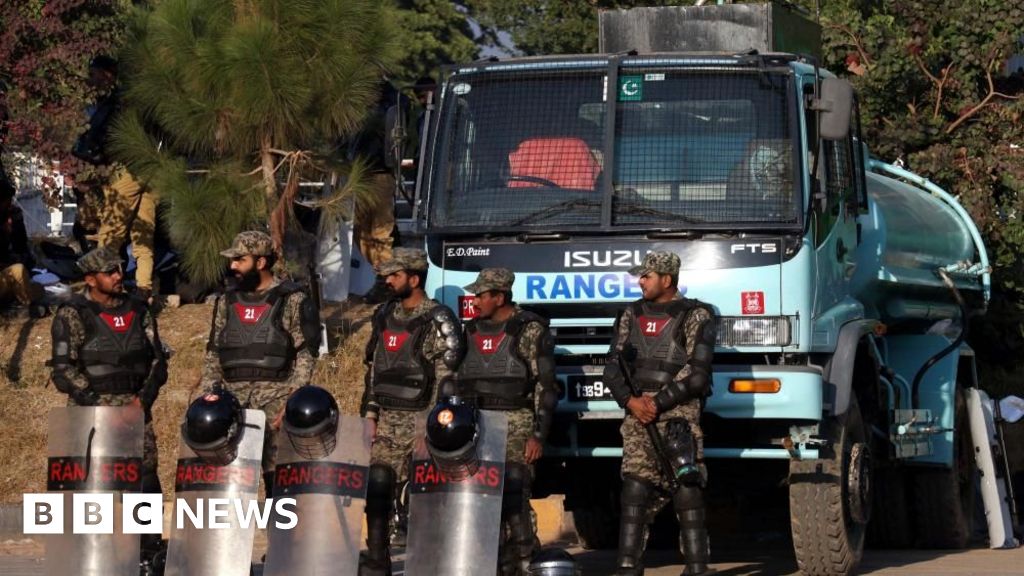
Interior Minister Laurent Nuñez said 70,000 police were being deployed, vowing “an extremely firm response” to any potential outbreaks of violence.
Some unrest was reported early on Thursday afternoon in Lyon where a car was set alight, in incidents blamed on hundreds of people belonging to the radical left-wing “black bloc”.

The five unions have combined forces across the public and private sector, announcing more than 250 separate actions as part of their campaign for higher wages to combat the cost of living and protect public services.
Binet told reporters at the start of a march in central Paris that protesters had “just reached a new level in their mobilisation” and were demanding immediate answers.
Disruption was reported in schools, hospitals and public transport, and the Eiffel Tower and some exhibition rooms at the Louvre museum in Paris had to close.
Workers were also asked to halt production at oil refineries and France was expected to import more electricity than it produced on Thursday because of disruption at nuclear plants.
A coalition of unions has urged workers, pensioners and young people to join Thursday’s day of strikes to intensify pressure on the government. In particular they are seeking a rise in the minimum wage, or Smic, which is currently €12.31 (£10) an hour.

The head of the CFDT union, Marylise Léon, complained that it was not just the minimum wage that needed to increase: “We are asking for a net increase of €100 a month.”
The government has sought to appease public anger over rising prices, bringing down the cost of fuel by releasing 10 million barrels of diesel from strategic reserves. Ministers have also promised school students to reform the unpopular Parcoursup university admissions platform and eventually replace it by 2028.
The education ministry said that 16% of teachers had gone on strike, and the unions said disruption had affected more than one in four lycées, which cater for 15-18 year-olds, as well as the vast majority of universities.
Large numbers are expected on the streets, especially in the capital, and the CFDT leader said she would be happy if 800,000 people turned out.
Meanwhile, a revived gilets jaunes (yellow-vest) movement that staged a revolt against the high cost of living several years ago has called for further blockades and protests on Friday and Saturday too.
Union leaders have complained that recent marches have been kept away from the centre of Paris, because of violence that broke out in towns and cities on 17 October and led to more than 2,000 stores being looted and historic buildings being set on fire.
Thursday’s march was eventually allowed in central Paris, although not along the route proposed by the unions between Place de la Bastille and Place de la Concorde, which would have taken protesters near the National Assembly, the Élysée Palace, and the prime minister’s residence at Hôtel Matignon.
Instead, the march was set to follow another central route from Place de la République to Place de la Nation. The CFDT union complained that getting court approval for the route only on Wednesday evening made organising the march more difficult.
The last big mobilisation at the weekend passed off with relatively little violence, and the interior minister said the police deployment would be on a similar scale on Thursday. Nuñez has spoken of three potential risks on Thursday, from radical left “black blocs” groups and looting to wildcat marches without union authorisation.