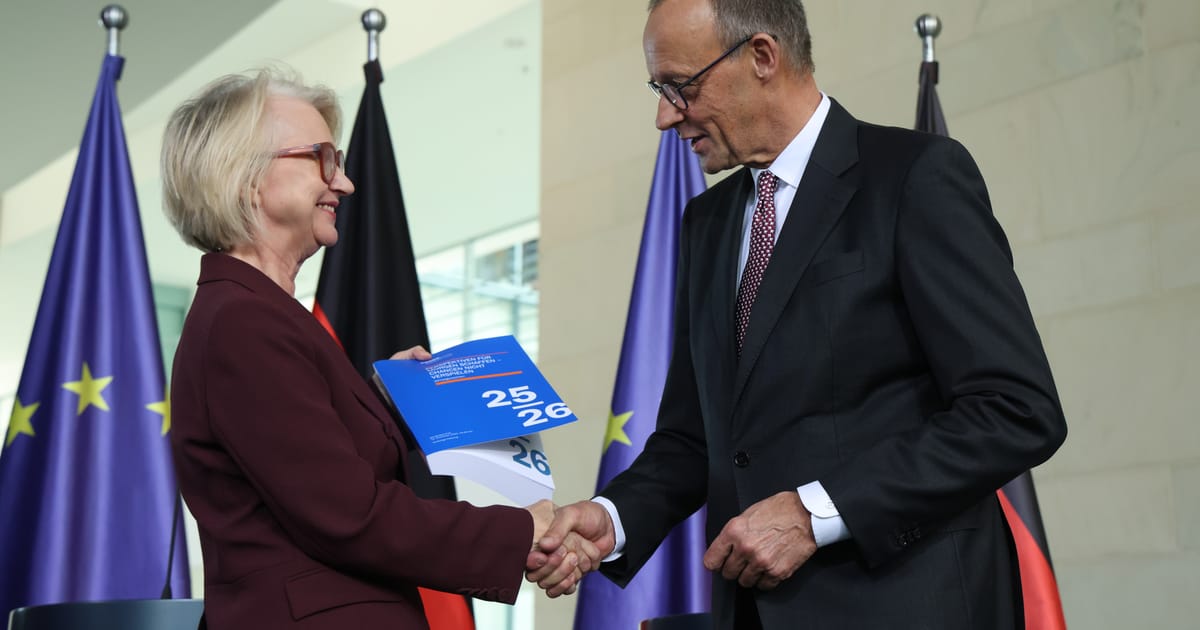
“We know what negative consequences this will have,” she said, “It means less take-home pay. People will be able to consume less, have fewer incentives to work — that’s bad for the economy. Labor costs for businesses will rise — that’s bad for the economy. The pressure to act is immense.”
Germany’s weak economic performance has fueled growing public frustration with the government, driving Merz’s government to record-low approval ratings even as many of the forces driving the country’s economic malaise lie beyond the chancellor’s immediate control.
The population is aging rapidly, with the retirement of the baby boom generation sending pension and health care costs soaring. At the same time, the country’s export-dependent economy is under mounting strain from persistently high energy prices linked to the U.S.-Israeli war with Iran, intensifying Chinese competition in core manufacturing sectors, and pressure from U.S. tariffs.
The economic council cut its growth forecast for this year to 0.5 percent — in line with the government’s own forecast — down from 0.9 percent, citing the expected economic fallout from the war in Iran. The economists also expect inflation to rise to 3.0 percent.
“Tariffs and the energy crisis are hitting the German economy particularly hard, as it is a net exporter of goods and a net importer of fossil fuels,” said economist Gabriel Felbermayr.
“We all watch the events unfold with bated breath every day and have little chance of making any real predictions here. However, every day that passes with the Strait of Hormuz blocked makes the worst-case scenario [of prolonged stagnation] more likely,” Felbermayr added.