The remarks came shortly after Danish Prime Minister Mette Frederiksen unveiled a new coalition government on Wednesday, ending months of political uncertainty. Foreign Minister Lars Løkke Rasmussen retained his post and is expected to remain Copenhagen’s key interlocutor with Washington on Greenland.
Trump’s bid to acquire the Arctic island in January this year rattled European allies and prompted Denmark to prepare contingency plans for a worst-case scenario involving U.S. action against its territory.
Relations within NATO members deteriorated further when the U.S. and Israel attacked Iran in February — and several European capitals declined to offer military help. Madrid denied the use of its air bases, while other EU countries refused to send naval vessels to help reopen the Strait of Hormuz. Trump then floated the prospect of leaving the alliance in April before ordering the withdrawal of 5,000 U.S. troops from Germany in early May.
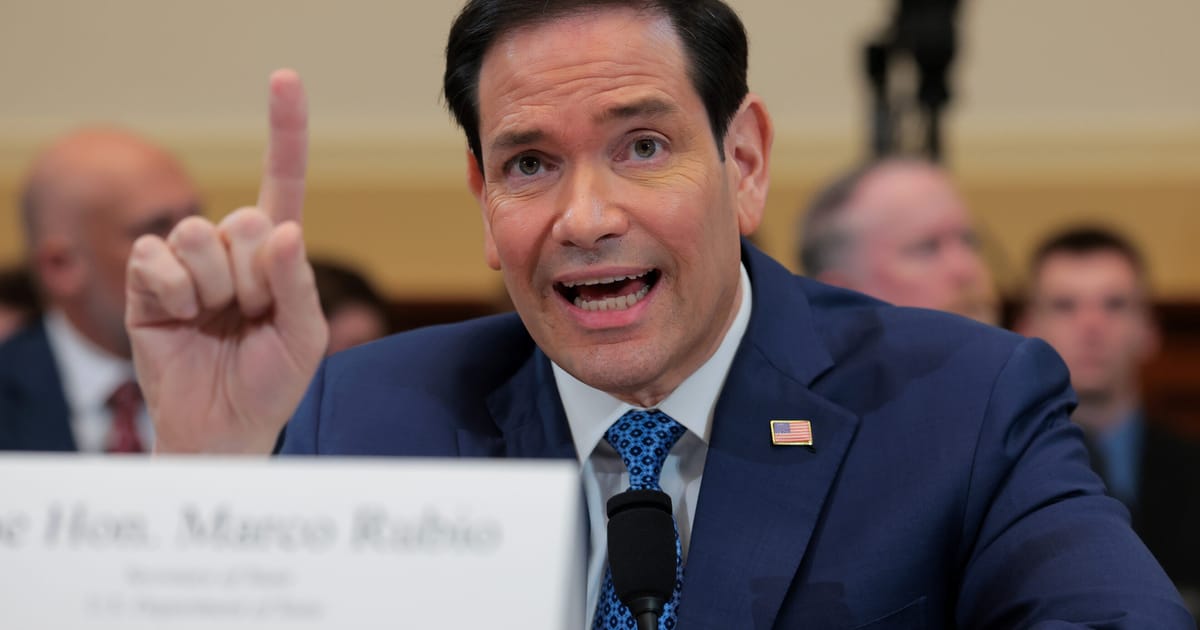
Against that backdrop, Rubio cast NATO’s July 7-8 summit in The Hague as a pivotal moment, predicting it could become “the most important” gathering in the alliance’s history.
CORRECTION: This article has been updated on June 4 to correct the details of the next NATO summit.