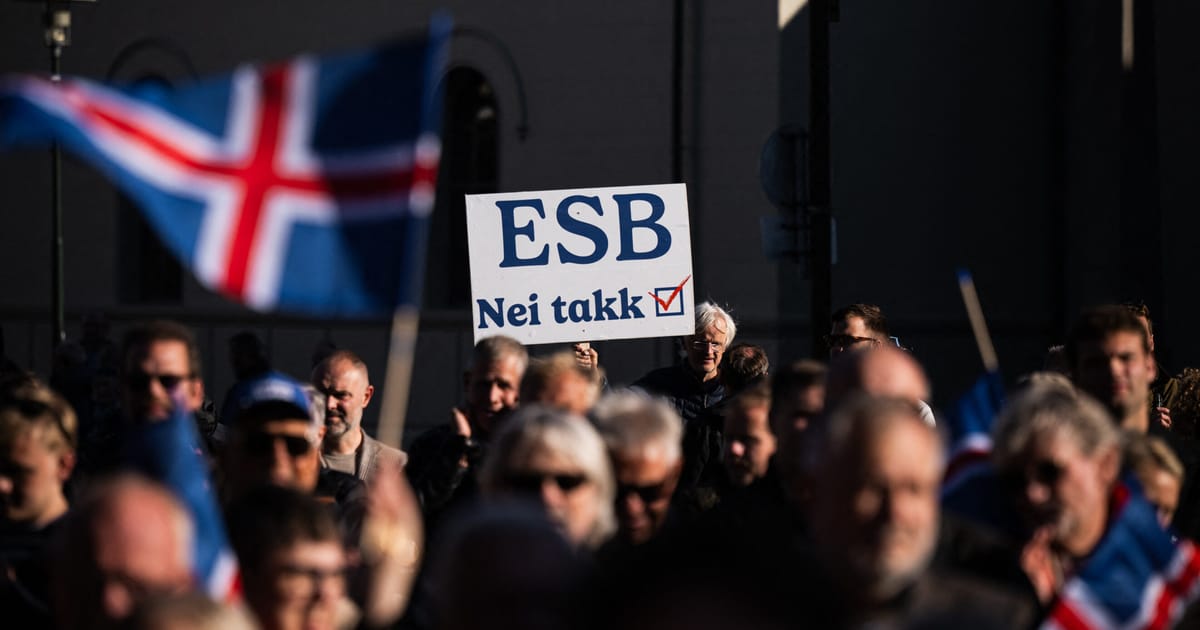
Iceland first started talks to join the EU in 2009, in the aftermath of the financial crisis that devastated its financial sector. These talks were largely inconclusive before being definitively called off in 2015, with arguments over fishing quotas contributing to the collapse.
The government, led by Social Democratic Prime Minister Kristrún Frostadóttir, then promised to hold a referendum after coming into power at the end of 2024. She had argued that joining the union would insulate Iceland’s economy from bilateral tariffs that would be difficult for the small nation to deal with alone.
Months of roiling debate over Saturday’s referendum gripped the country, with the public nearly evenly split over whether to restart talks. The main issues for those in opposition are concerns over control of rich fisheries off the coast of the small island nation, while supporters point to adopting the euro for more currency stability and pulling closer to mainland Europe at a time when President Donald Trump slaps tariffs on allies and threatens to take over nearby Greenland.
“It is no secret that the situation has changed a great deal over the past one and a half years,” Frostadóttir said in a televised debate just 48 hours before the vote. “We are seeing the United States use tariffs as instruments of trade coercion and as a weapon.”
Detractors, such as Guðrún Hafsteinsdóttir, the leader of the conservative Independence Party, said that the country was better off charting its own course while remaining a member of the European Economic Area.
This article has been updated.