But as Germany’s export-oriented growth model continues to suffer amid increased competition from China and U.S. President Donald Trump’s tariff wars, German voters don’t appear to be giving him the benefit of the doubt.
The chancellor’s agenda includes raising the retirement age to shore up the pension system, cutting some health-insurance benefits to curb rising premiums and making it harder for workers to take sick leave in an effort to boost growth.
Many of those reforms impose clear costs on ordinary voters, giving the far right and far left ample opportunity to exploit public discontent.
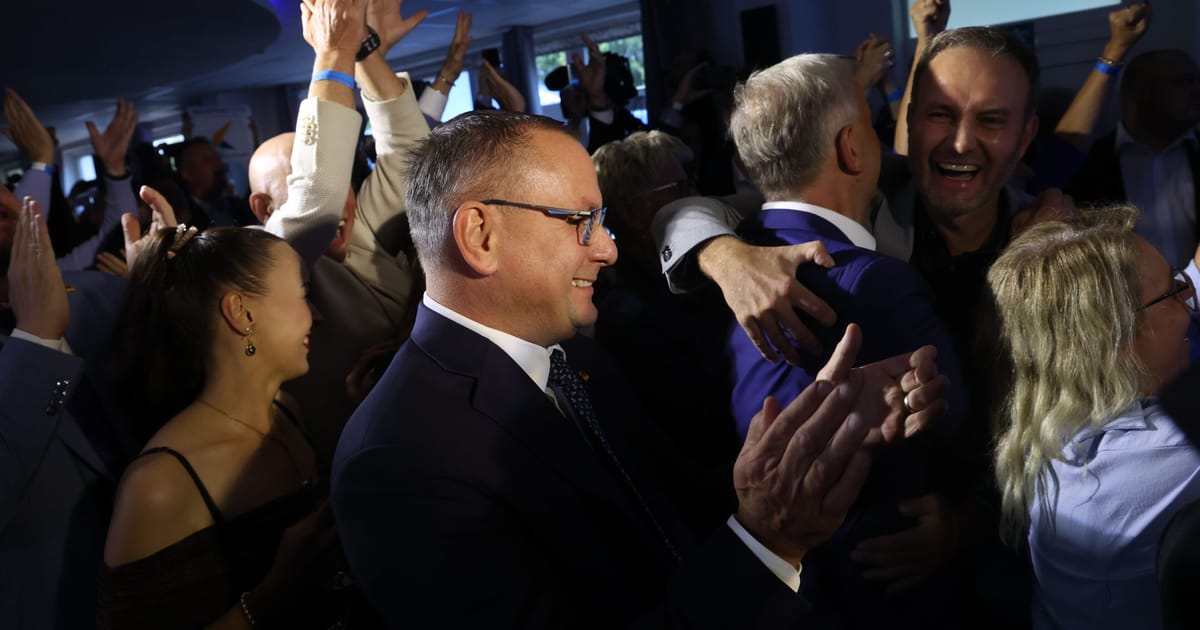
Despite the AfD’s victory in Mecklenburg-Western Pomerania, the party has no chance of governing in the state in part due to a late, come-from-behind surge for the SPD under state premier Manuela Schwesig, who cast herself in the election as a bulwark against the far right by employing the slogan “Frau gegen Blau” — “Woman against Blue,” a reference to the AfD’s party color.
Schwesig is now likely to lead a new coalition government in the state with a coalition of left-wing parties.
CDU leaders blamed Schwesig’s approach for effectively turning the election in her state into a two-party race that has greatly weakened Merz’s conservatives. “The CDU fought hard, but in the end, it was crushed in the escalating confrontation between the SPD and the AfD,” Merz said.
But Schwesig blamed Merz and the CDU for failing to connect with voters and was able to gain on the AfD late in the race in great part because she attacked Merz as out of touch with ordinary people and his reform drive as punishing some of the most vulnerable.
“The issue of the cost of living is a very significant one, and it’s important for the federal government to take a stand in favor of greater economic development to create jobs, but also to provide relief,” she told a public television broadcaster after the vote.
Still, trying to stabilize the situation, Philipp Amthor, a CDU politician from Mecklenburg-Western Pomerania and the chancellery’s federal-state affairs chief, said it was time to end the Kanzlertausch discussion.
“We have seen that what we have experienced over the past two weeks since the state election in Saxony-Anhalt has done more harm than good — namely, ongoing discussions about personnel that have completely overshadowed the discussion of the issues at hand,” he said.
“In that regard, it is right to put an end to these personnel discussions now and refocus on the issues.”