From the Bitterroot to the hard water to the table, a life measured in seasons rather than dates.
The chest freezer in a Montana kitchen reads like a diary. Trout from July. Elk from October. Burbot from February. Nathalie Guasis has learned to stock hers the way most people stock a pantry, one season at a time.
That is what a year looks like for her now. Fly rod in summer. Rifle and binoculars in fall. In winter, a hole drilled through the ice and a shelter pitched over it. Somewhere in every one of those months, a plate of something she or someone close to her pulled out of the country.
The outdoor life is not stacked on top of her work. It is the reason the work exists. Guasis runs short-term rentals out of Bozeman and takes on interior project management for properties around the valley. The guests who book her space are usually there for the same reasons she stayed.
Summer on the West Fork
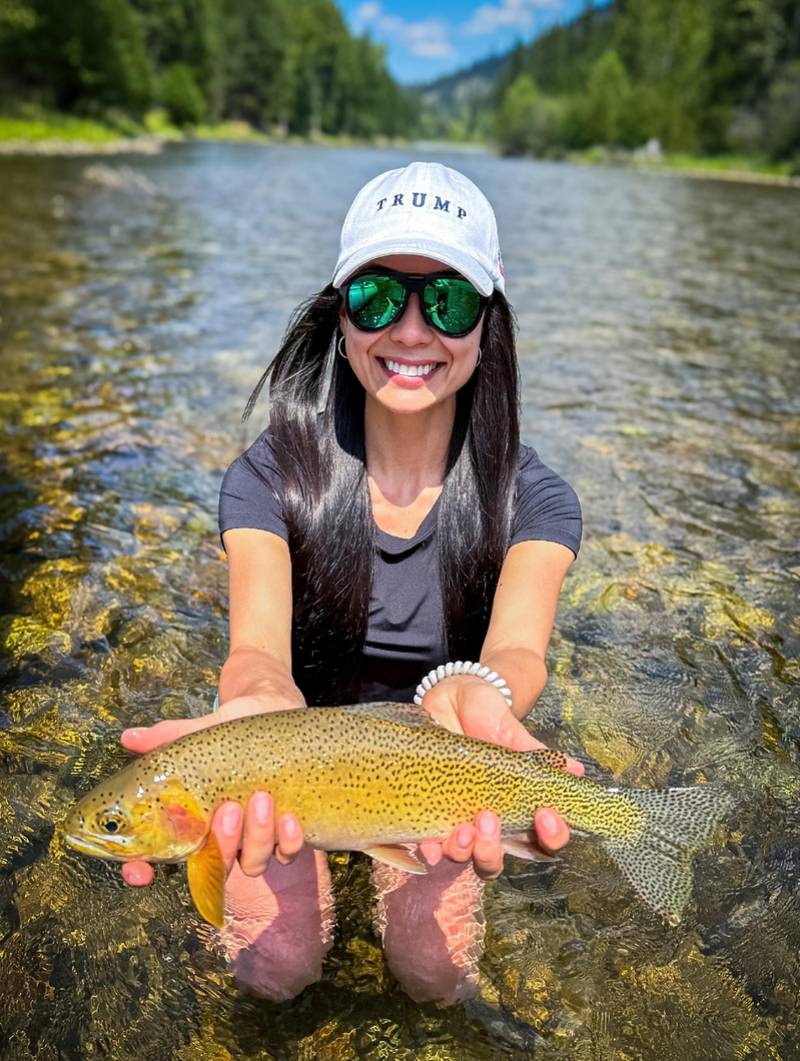
The Bitterroot trip came together on a phone call. Her best friend was in from Oklahoma City, the window was short, and Guasis took the day off. Donnie, a commercial photographer and local fishing guide in the valley, pulled the logistics together on short notice. By late morning they were on the water outside Hamilton, a small town on Montana’s western edge that most travelers skip.
They stayed in a river house run by a local host company that rents a small portfolio of properties almost exclusively to anglers. Newer build, close enough to the water that the walk to the run took minutes, and a standing relationship with a local fly outfitter that turns a booking into a fishing day without the guest having to assemble it themselves. Guasis noticed it professionally as much as personally. It is the same instinct she brings to her own rentals two hours east: figure out what the guest actually came for, then build the stay around that one thing.
The West Fork ran clear that afternoon, the kind of green-gold color that looks staged in photographs. Guasis brought in a solid rainbow, held it long enough for a photo, and let it slip back into the current. Fly fishing runs on that trade: the fish gives you a minute of its life, you give it back its river.
“I do not wait around for the perfect day. You go with what the week gives you, and the river takes care of the rest.”
What she likes about the West Fork is how quickly the noise falls off once you push a mile upstream. Hamilton has a working-town feel: cattle trailers on Main Street, a coffee shop next to a fly shop. Twenty minutes past it, the traffic disappears and the water carries the day.
Fall on the Mountain
By October the rivers get left alone and the country gets steeper. Guasis spends fall glassing ridgelines at sunrise and sunset, boots on rock, binoculars on a tripod, waiting for movement across a basin. It is a slower kind of hunting than most outsiders picture. Long hours of nothing, then a few minutes of everything.
The backcountry does not hand any of it over. Getting into a good glassing position at first light means being on the mountain in the dark. Packing an animal out means the real work starts after the shot. Guasis has been open about the physical demands of it, and about the fact that she trains for it deliberately.
“You cannot fake being ready for the mountain. The country tells you what kind of shape you are in, usually about a mile from the truck.”
Mountain Tough Fitness in Bozeman is where a lot of that training happens. The workouts are built for exactly this kind of country: sustained load-bearing, uneven terrain, the specific muscular endurance a Montana fall demands. The fitness side of her outdoor life is not incidental to the hunting side. It is what makes the hunting possible.
Winter on the Hard Water
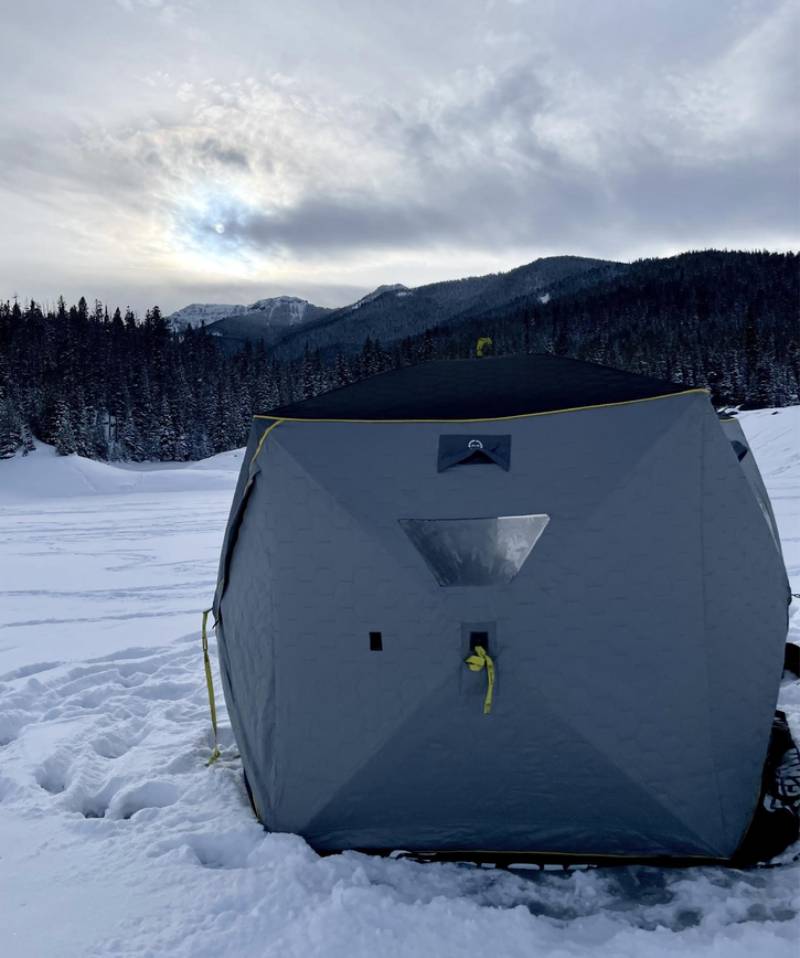
Winter rewrites the map. Drift boats go into storage. Rivers freeze at the edges, then across. Nobody here calls it a frozen lake. They call it hard water, and they wait for it the way anglers elsewhere wait for a hatch.
Guasis trades the West Fork for hard water, a portable shelter set over a drilled hole, and a heater that turns the whole rig into a quiet room in the middle of a mountain range. She is quick to hand credit for the auger work to the friends she goes out with. Going with people who know what they are doing, in her telling, is most of the appeal.
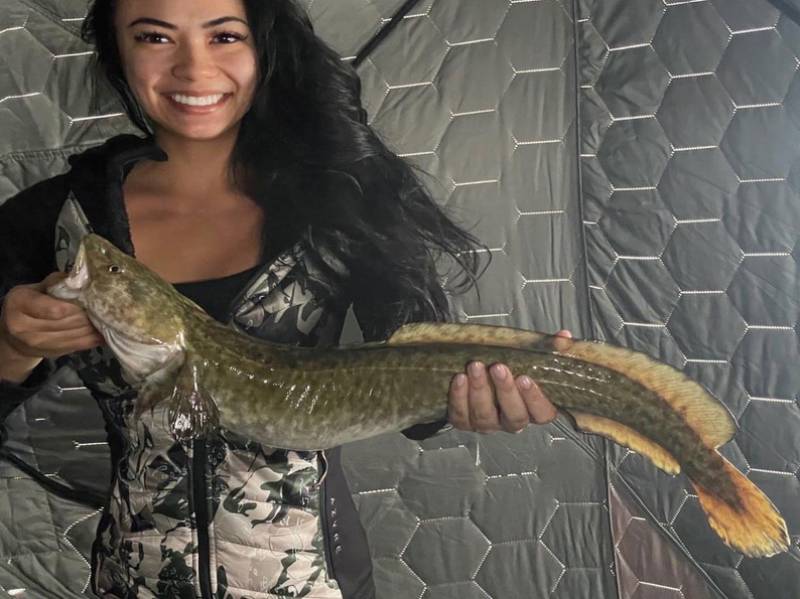
Ice fishing runs on different discipline than fly fishing. Fly fishing is motion, reading water, watching for a rise. Ice fishing is stillness, often silence, punctuated by the electronic ping of a flasher screen showing what is moving under your feet.
The burbot is also the one fish that does not go back. Trout are catch and release. Burbot come home. They sit in the cod family and they cook like it, which is how they end up as burbot tacos on her counter, or piled into a split roll the way a coastal kitchen would treat lobster. The fish looks strange enough coming through the hole that first-timers assume it is inedible. It is the opposite.
Getting to the shelter is its own workout. Sleds loaded with gear, snow that swallows a boot to the knee in the wrong spot, wind that finds the seam in any jacket. Guasis says the quiet inside, once everything is set up, is something she plans her calendar around.
“There is a specific kind of quiet inside a shelter out on the hard water that I have stopped trying to explain. You either need it or you do not. I have realized I need it.”
On the Table
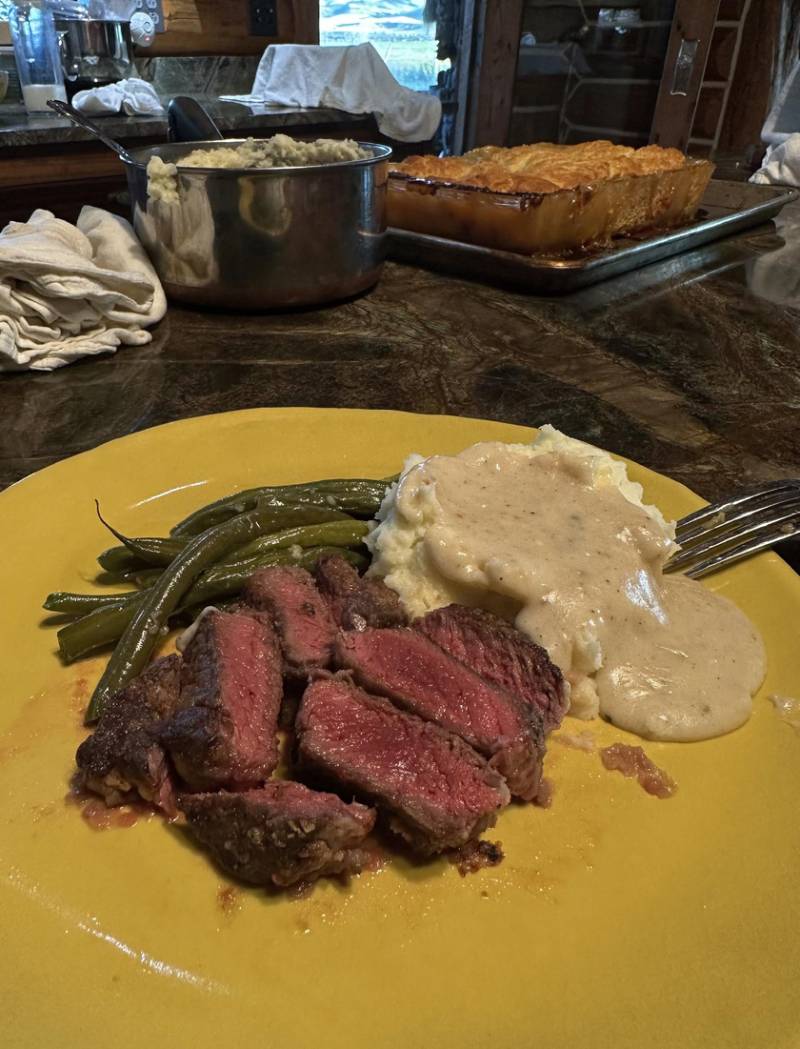
The through-line across all three seasons is what ends up on the plate. A recent dinner came together the way most of her meals do in Montana: steak seared medium-rare, mashed potatoes with gravy, green beans, a sheet pan of something bubbling in the background. Some of it store-bought, some of it not. Most Montanans she knows keep a chest freezer that reads like a season-by-season record of the past year.
Wild game on a plate is the payoff for the fitness, the early mornings, the miles. It is also the reason the outdoor life stays connected to real work rather than sliding into recreation for its own sake. You put in the season, you eat the season.
That rhythm is part of what she tries to give her rental guests, at least the ones who ask. Where the good water is that week. Which trailhead is worth the drive. Where to buy meat if they did not bring a cooler. The hosting business and the outdoor life run on the same schedule.
Guasis is not from Montana originally, and she does not pretend to be. What she has built since moving to Bozeman is a working life that answers directly to the country around it: a hosting business in a mountain town, a client roster in interior project management, and a personal calendar measured in river days, ridgeline mornings, and ice shelters.
“What Montana has given me is a life that runs on its own calendar instead of mine. That is not something I could have found anywhere else.”
The rainbow is back in the water. The burbot went home and became dinner. The freezer is stocked. Guasis is back in Bozeman, running properties, taking meetings, and watching the weather for the next window.