SACRAMENTO — California just took its first concrete steps toward regulating its growing data center industry as public appetite builds to crack down on the massive facilities.
Amid widespread concerns about environmental and economic impacts of data centers, Gov. Gavin Newsom signed seven bills Monday morning aimed at protecting consumers from growing electricity costs and tracking the centers’ immense energy and water consumption.
The move represents a reversal for the governor, who last year vetoed legislation to require data centers to report water use and expressed support for the facilities that serve artificial intelligence platforms.
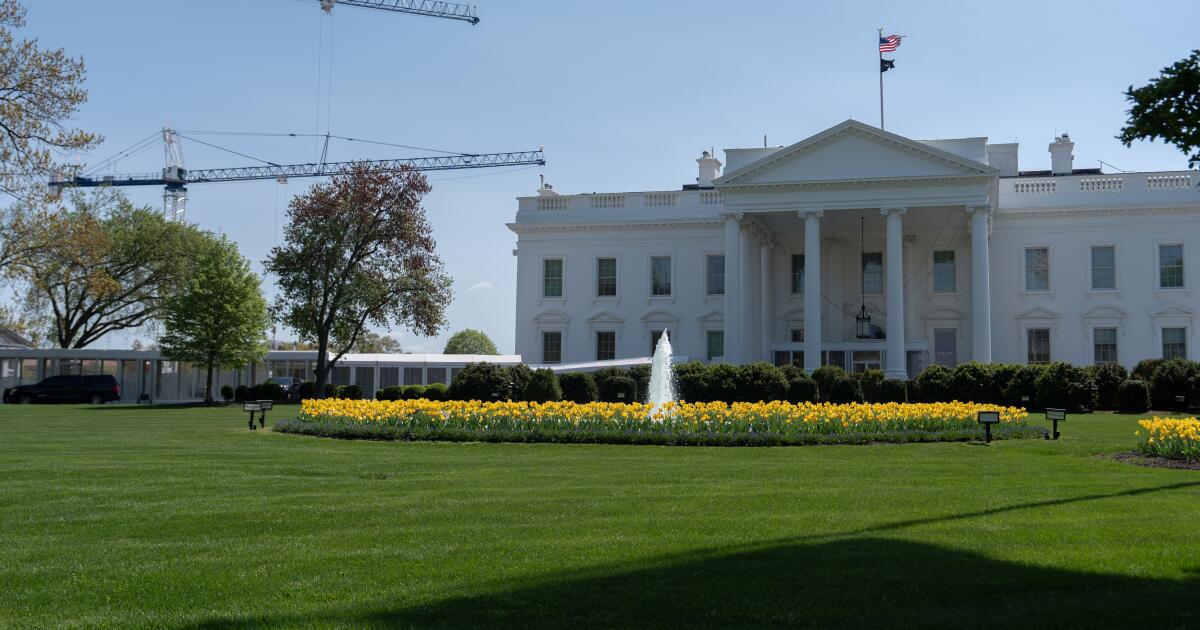
Newsom on Monday criticized President Trump for dismissing calls to curtail or regulate the facilities and heralding them as “money machines,” even as states and communities across the nation take action to ban or restrict the centers.
Trump suggested in a social media post last month that communities who reject data centers will end up “backwards and poor.” “If they want to be successful and rich, with far lower taxes and jobs all over the place, let Data Reign,” Trump wrote.
“While the Trump administration moves toward deregulation, communities are left to deal with the consequences — higher electricity demand, grid constraints, water use, and pollution,” Newsom said in a written statement Monday. “With these laws, we are ensuring that Californians remain in the driver’s seat — and that those profiting from data centers aren’t doing so at our expense.”
Among the legislation signed by Newsom was Senate Bill 886 by Sen. Steve Padilla (D-Chula Vista) and Assembly Bill 2383 by Assemblymember Rick Chavez Zbur (D-Los Angeles), which will establish special rules for data centers’ electrical use. The law orders the California Public Utilities Commission to create special requirements and rates for data centers’ use of electricity, including the costs for new power and for infrastructure upgrades.
Scores of other states have already passed similar legislation, according to ratepayer advocacy groups, who celebrated the new laws.
“Collectively these measures protect ratepayers from subsidizing the significant energy consumption of data centers, ensuring that the data centers pay upfront for the extra infrastructure that must be built to operate them, and pay their fair share for wildfire mitigation and other ratepayer funded programs,” Mark Toney, executive director of the Utility Reform Network, a ratepayer advocacy group, said.
Another bill, AB 1577 by Assemblymember Rebecca Bauer-Kahan (D-Orinda), will require data centers to report their energy usage and efficiency information to the California Energy Commission to be published annually in public reports.
And two bills by Assemblymember Diane Papan (D-San Mateo) will require oversight of data center water consumption.
One measure will require data center operators, when applying for a business license or permit, to disclose an estimate of their water use and the expected source of water. Another will bar cities and counties from approving a new or expanded data center unless the developer submits a water assessment and a water scarcity plan, and will require developers to cover the cost of any water system upgrade that is necessary.
In a report earlier this year, UC Berkeley researchers said even as public concerns about data centers grow, very little information has been publicly available on how much water they actually use.
The degree of secrecy has been such that developers have not been willing to say how much water they plan to use and in some places local officials have signed NDAs promising not to tell the public anything about a planned center.
Michael Kiparsky, director of the Wheeler Water Institute at the UC Berkeley School of Law, said collecting information on how much water data centers use is necessary and a good start, but that the state should go further in helping local governments assess whether they have enough water capacity to permit new facilities.
Newsom vetoed a similar bill authored by Papan last year that would have required new data centers to disclose their expected water use. The governor said he was “reluctant to impose rigid reporting requirements” on “this critically important digital infrastructure” without understanding the full impact on the businesses.
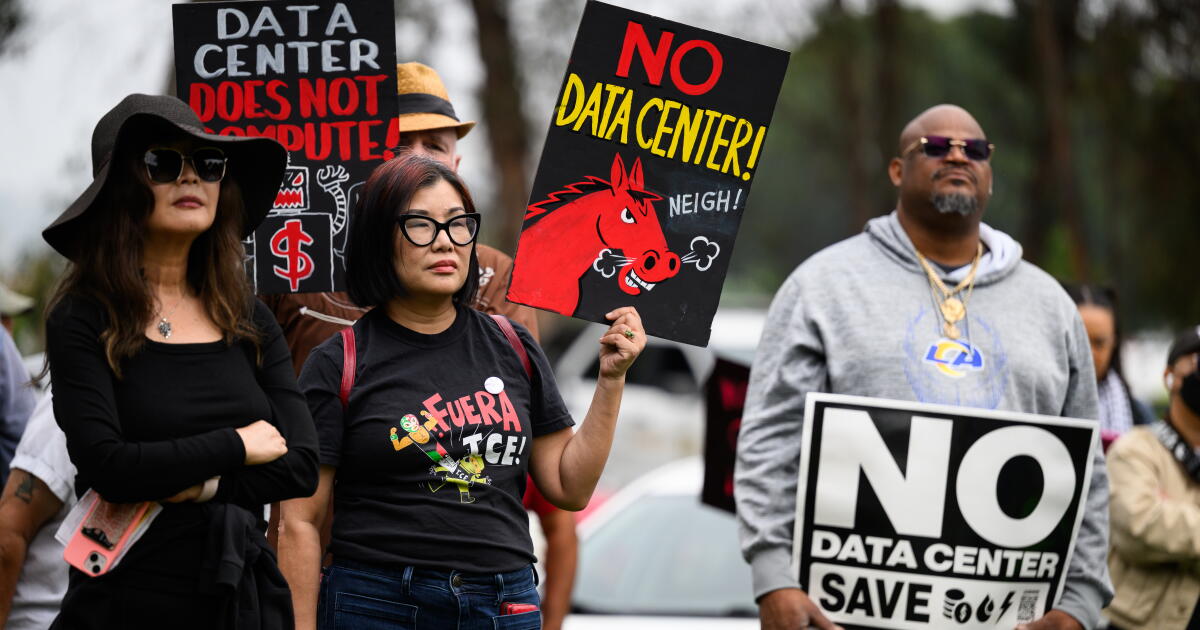
But over the last year, a wave of data center pushback has swept the nation, including California, where dozens of cities and counties have proposed or adopted moratoriums on the facilities. California lawmakers are resisting outright moratoriums and bans that the public is calling for and instead are pursuing greater regulation. Bills similar to several of the ones signed this year failed to pass the Legislature or were watered down last year.
Padilla said the shift has come as demand for gargantuan data centers to power AI has grown rapidly over the last year alongside public awareness of data center impacts.
“Even as opposed to 12 months ago, there’s an increasing awareness of the need to be very careful that we get this right,” said Padilla. “The Legislature and the governor have stepped up to meet the need.”
The Data Center Coalition, which opposed the bills signed Monday by the governor, said they would make California a more challenging place to develop the facilities.
“Legislation such as these create significant uncertainty and introduces potentially duplicative requirements that make doing business in California an unattractive proposition for data centers and other industries,” director of government affairs Khara Boender said. “These bills are likely to further limit data center development in California — an already declining market — which pushes job creation, clean energy deployment, and tax revenue to neighboring states.”
Data centers have existed for decades but are rapidly expanding because of the rise of artificial intelligence, or AI. The centers help power everything from streaming services to videoconferencing calls.
Data centers in California are typically smaller than the mammoth, 500+-megawatt AI facilities making headlines in other parts of the country. Electricity costs and state regulations on gas-powered generators limit the vast majority of them to under 100 megawatts.
But as proposals increase in number, opposition has been fierce and growing. The California Energy Commission expects data center electricity use, currently 2% of the state’s demand, to double in the next 10 years. And a Public Policy Institute of California poll from July showed that 73% of residents oppose the construction of data centers in their communities.
Monterey Park became the first city in the country in June to permanently ban data centers by a popular vote, at least four other San Gabriel Valley cities have enacted moratoriums, and L.A. County instituted a moratorium for unincorporated areas last week.
Southeast of L.A., Imperial County, Desert Hot Springs and Palm Springs also passed moratoriums, while Coachella permanently banned the facilities.
In the Central Valley, Tulare County adopted a moratorium last month as residents voiced opposition to proposals to develop tiny data centers on local fairgrounds in the region. Fresno City Council is moving forward with a ban and San Joaquin County is weighing one.
In the Bay Area, San Francisco supervisors introduced a proposal earlier this month to block data centers for 45 days while the city creates new codes. Oakland is considering a moratorium and Richmond recently voted to approve one.
The vast majority of California’s data centers are in Santa Clara and San José. In the latter city, leaders continue to court development amid growing resident backlash.