Madrid has forcefully rejected Italy’s accusations and pointed out that none of the migrants who entered Ceuta could have benefited from the legal status scheme, which is subject to specific qualifying conditions. Moreover, Spanish officials have bristled at Rome’s suggestion that they are mismanaging the bloc’s external borders, pointing to data showing Italy is doing a far worse job of handling unauthorized migrants.
“Italy is the EU member state that has recorded the highest number of irregular crossings in recent years, with figures that have at times been twice those of Spain,” a Spanish government spokesperson said on Friday.
By reintroducing border controls, Italy and Spain have underscored the fragility of the Schengen area, which has existed since 1995 and now extends to 29 European countries.
Under the current rules, any member country is allowed to reintroduce checks for an initial period of up to six months to address security threats. The measures can be renewed for six-month periods for up to two years, and, in exceptional circumstances, up to three years.
Few expect the spat between Rome and Madrid to endure for that long, but in the meantime those traveling between the two countries will have to endure the resulting inconvenience.
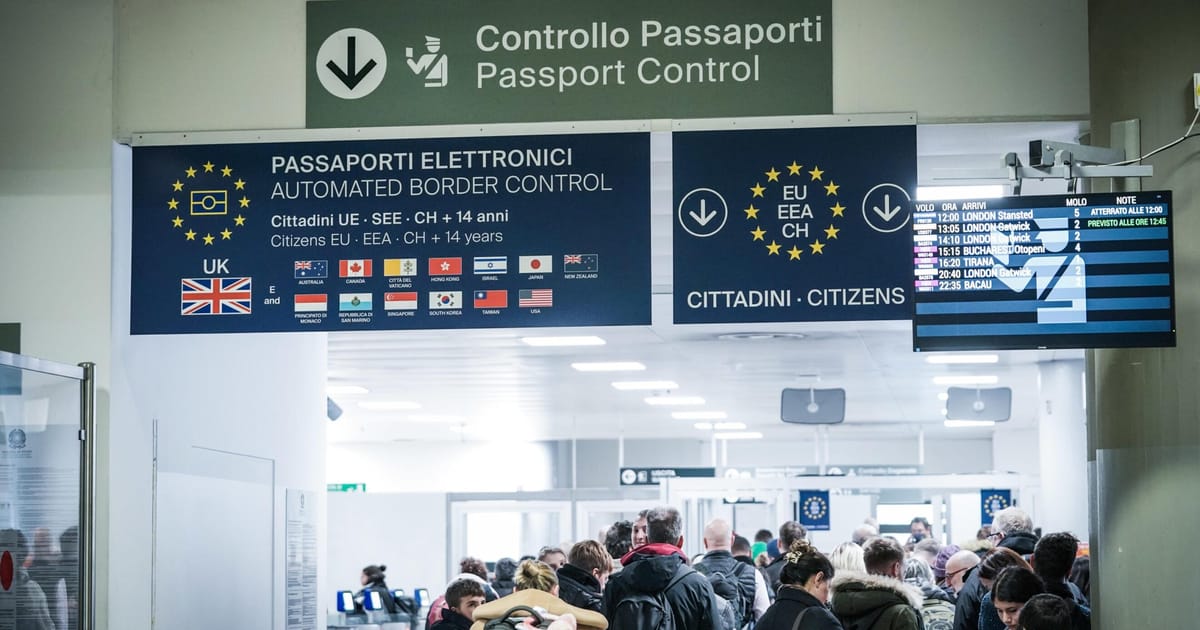
Throughout the week, passengers on flights departing from Spanish airports have complained about the scrutiny they have faced upon arrival in Italy, with travelers reporting significant delays as Italian carabinieri checked their IDs. On Saturday, passengers on Italian flights arriving in Spain were subjected to similar controls, with National Police holding travelers who could not provide official identification.
Some 5.4 million Italians visited Spain. The renewed controls could push travelers to reconsider trips between the two countries — and make other European destinations the inadvertent beneficiaries of an ideological battle playing out in passport queues.
This article has been updated with additional reporting by Gabriel Gavin.