Author
Ahmed Barakat
Author

Share

Fact Checked by
CryptoNews Editorial Team
Author

Crypto’s stablecoin market has shed $16 billion in a month, marking its sharpest contraction since the 2022 bear market. The retreat is hitting USDT and USDC hard, leaving fewer dollar-backed tokens circulating.
Total stablecoin market cap is now standing at $283 billion, plunges by more than 5% in just a month, losing $16.5 billion in just a month. The decline puts the market under pressure just as crypto struggles to recover, with investors showing little appetite for buying the dip.
USDT and USDC Lead the Stablecoin Market Exodus
Tether’s USDT and Circle’s USDC account for most of the latest contraction. USDT is holding a market cap of $175.02 billion, down 4.3% over 30 days, while USDC fell to $68.58 billion, losing 5% during the same period. Together, the two stablecoins represent 86% of the entire market.
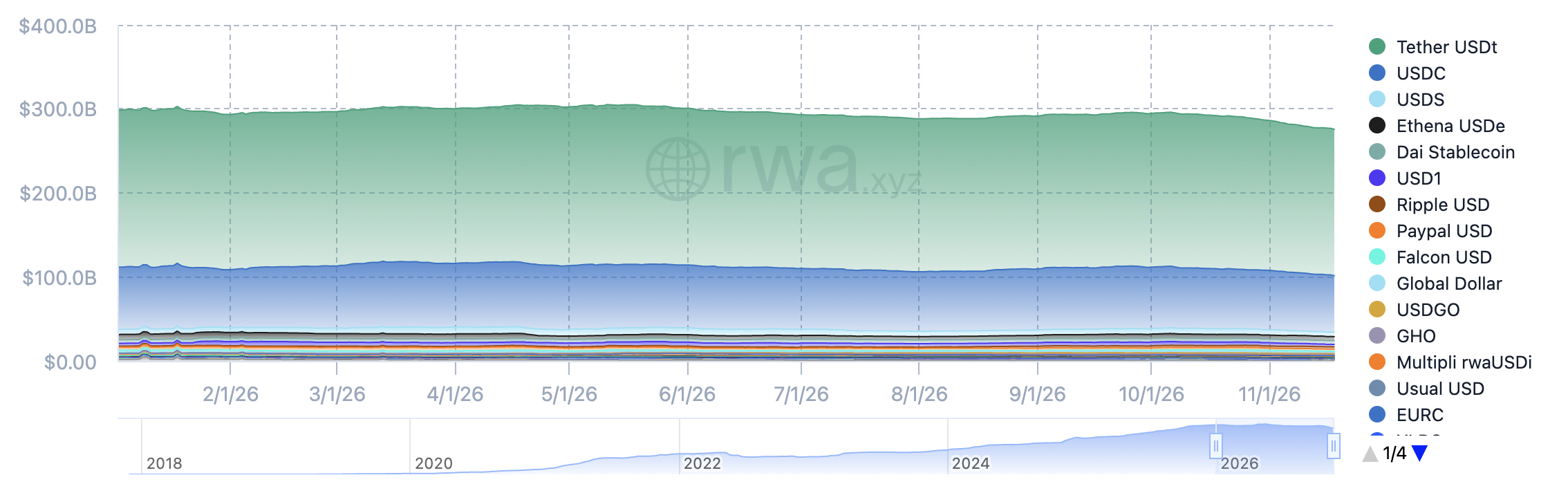
Source, RWA.xyz
The contraction also extends beyond dollar-backed tokens. Sky Dollar’s USDS supply dropped 22.32% over 30 days, while Ethena’s USDe expanded 4.36%. The gap shows that some are still moving between stablecoin products.
The pressure is also visible in exchange reserves. A November 11 CryptoQuant’s data showing USDT market cap had fallen $6.6 billion over 60 days through November 7. It was more than twice the $3.2 billion decline recorded after FTX collapsed in December 2022.
Discover: The Best Token Presales
The 2022 Crypto Winter Offers a Warning
The current contraction brings back an ugly history. Stablecoin supply reached $161.5 billion in March 2022 before entering a prolonged decline. Terra’s UST collapse accelerated the withdrawal of capital, with nearly $30 billion disappearing from stablecoin supply in June alone.
That monthly decline was almost twice the latest $16.5 billion contraction this time. Back in 2022, the damage continued into the following year. By September 2023, aggregate stablecoin supply had fallen by 26% from its March 2022 peak, a contraction of $43 billion.
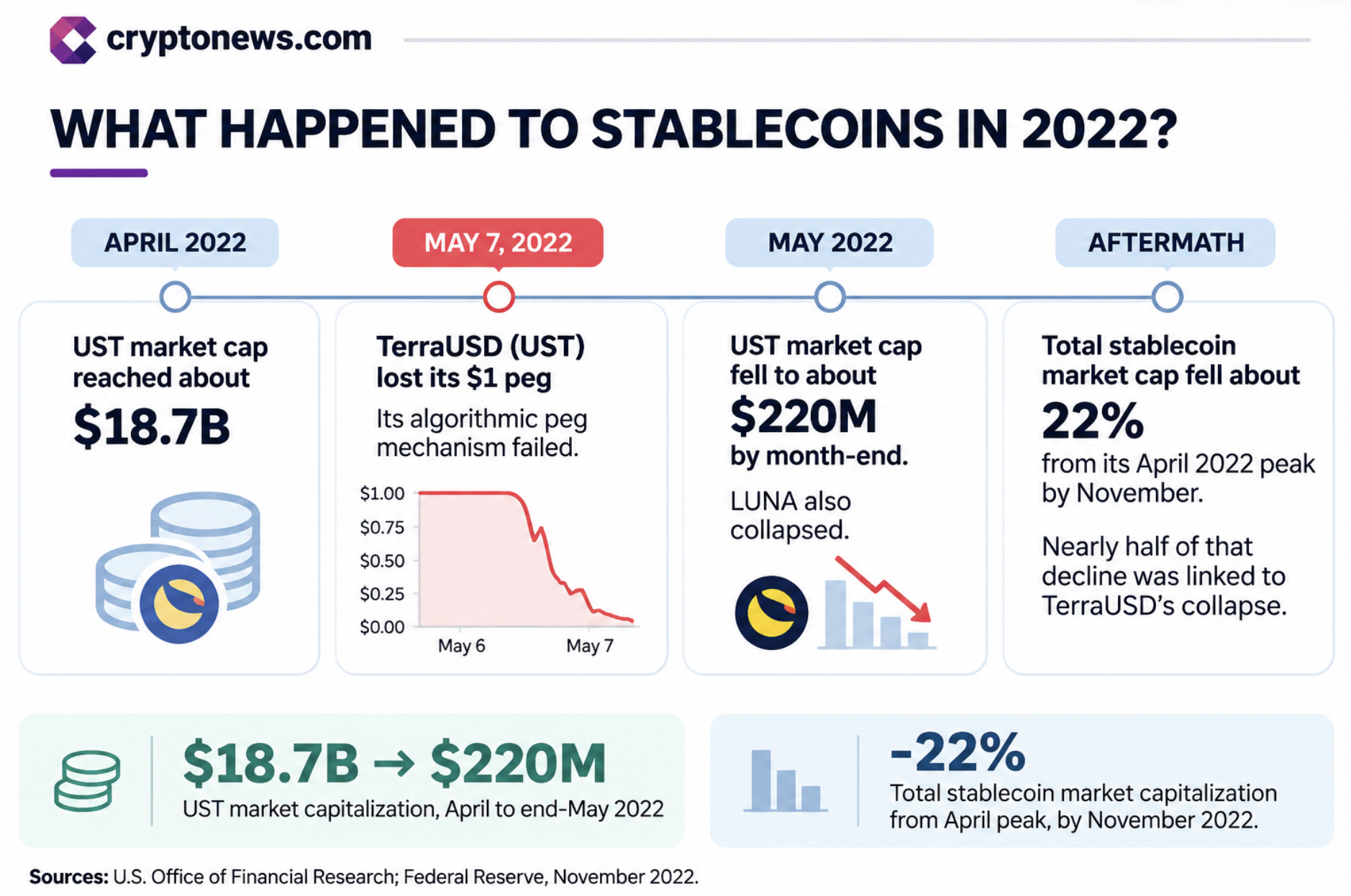
Bitcoin endured a similar period of weakness. After reaching nearly $69,000 in November 2021, BTC eventually plunged to around $15,500 in November 2022. Stablecoin supply continued shrinking even after the initial market shock initiated by Terra. Crypto’s liquidity problems then became a prolonged market condition.
Yet, in 2023, not every stablecoin experienced the same fate. We had a $13.3 billion increase in USDT supply from its November 2022 lows, while USDC lost $16.7 billion. During that period, investors were not simply abandoning every stablecoin. Some were moving toward Tether as the market reassessed issuers and available returns.
Where Is Crypto’s Liquidity Going?
This time, arguably, the stablecoin contraction is happening against a different market backdrop. Crypto traders have fewer reasons to keep large amounts of capital parked in stablecoins when Bitcoin and major altcoins struggle to attract buyers. Some holders may be redeeming their tokens for traditional dollars, while others are moving into interest-bearing assets outside crypto.
A shrinking stablecoin market does not mean every dollar has left digital assets. But the simultaneous decline in USDT and USDC supply makes the latest contraction harder to dismiss as simple rotation between issuers.
A crypto recovery needs buyers willing to commit fresh capital, and stablecoins have historically provided traders with an immediate way to enter the market.
Discover: The Crypto Presales This Q4 2026