WASHINGTON — With three months remaining until election day, there is now little the Trump administration can do to bring relief to Americans battered by years of stagnant wages and steep inflation before they hit the polls, experts say — complicating midterm campaigning for Republicans and sharpening the opportunity for Democrats to win back some control in Washington.
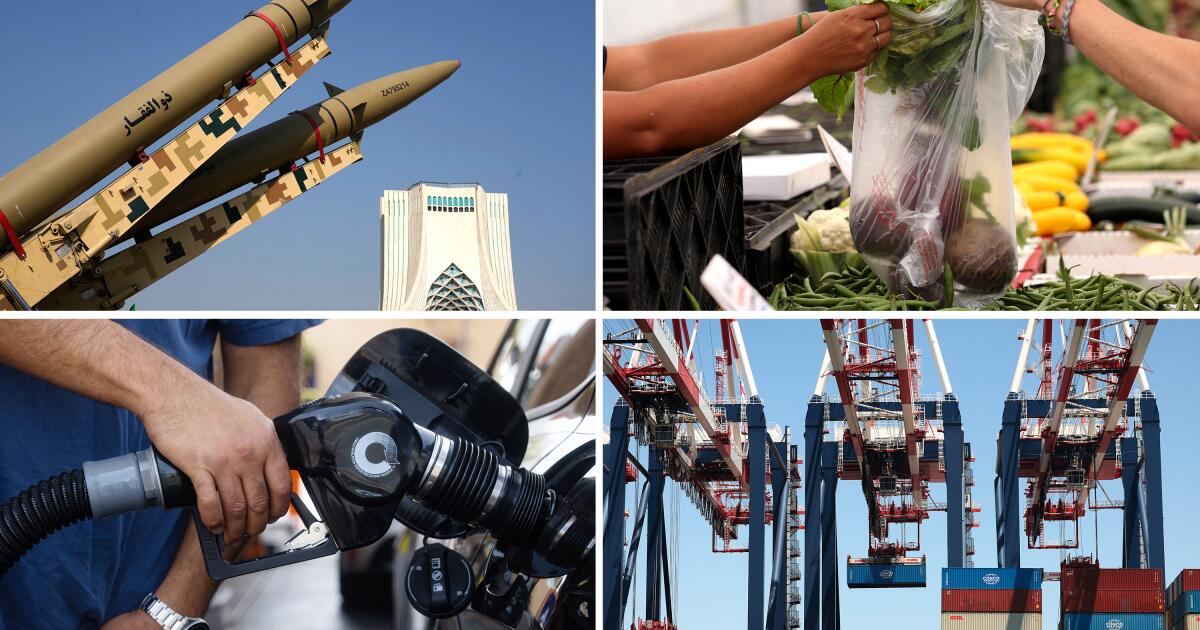
That’s in part because the Trump administration has very few levers to turn the tide in such a short period, and has shown little interest in using those it does have, experts said. Rather, President Trump has persisted in waging war in Iran and pushed forward with new tariffs on trade partners despite both contributing to soaring costs for food, gas and other basic necessities.
Other options, such as issuing rebate checks for consumers or releasing strategic oil reserves, would be costly in the long run, experts said.
“There isn’t much available on a 14-week clock that doesn’t cost more later than it delivers now,” said Patrick Harker, professor at the University of Pennsylvania Wharton School and former president of the Federal Reserve Bank of Philadelphia.
The Federal Reserve on Wednesday also declined to use its primary tool for reducing inflation — increasing interest rates — by instead holding rates steady. Trump had not supported a rate increase, instead pressuring the central bank to lower rates, which can lower borrowing costs but increase inflation.
Some factors driving up costs are virtually impossible to resolve in the near term, such as damage to oil refining capabilities in the Middle East as a result of the war in Iran. Others are already baked into pricing to come as a result of tariffs and fuel costs, including for groceries, experts said.
Incumbent parties often suffer midterm losses when voters are broadly pessimistic about the economy, as they are now despite remarkable resilience in the U.S. labor market and strong stock returns.
Consumer prices declined in June for the first time in six years, largely thanks to a decline in gas prices as the Iran war appeared headed toward a resolution — which is no longer the case.
New data Thursday showed the U.S. economy growing at a sluggish 1.5% pace from April through June. It also showed consumer spending and inflation slowing down. But slowing inflation has not meant lower costs.
As the Iran war entered its sixth month this week, average gas prices nationally climbed back above $4 a gallon. On Wednesday, the price of Brent crude oil rose to $90 a barrel as the U.S. and Iran carried out new strikes.
The White House did not respond to a request for comment. However, Trump asserted Wednesday that the economy is strong — citing in part new U.S. automobile plants as evidence — while slamming the Federal Reserve’s decision to leave interest rates unchanged.
“They want to keep rates up, but we will fight through this,” Trump told reporters at an Oval Office event. “We have things that are going on in our country in the likes of which no one has ever seen.”
As Democrats have seized on the economy as the midterms’ defining issue, Trump has promised improvements but also called affordability concerns a “hoax.” Last week, he rejected the notion that he should rethink his unpopular Iran strategy because of the looming midterms.
“No, the election — I can’t think about that having to do with this,” he said before renewing attacks last week. “I think people are very impressed.”
Jonathan Nagler, a New York University professor who studies how the economy shapes politics, said it is impossible to predict how voters will feel about the economy three months from now, because there are so many variables.
But data make clear that “the better the economy is, the better the incumbent does,” and voters will blame Trump and his party for their economic woes if they persist, Nagler said — particularly with gas prices, which are “a non-trivial expense” that is “super directly tied to Trump.”
“Democrats can draw a very straight line from a decision by Trump to go to war with Iran, and gas prices rising. That is just very, very easy to explain to people in a pretty convincing way,” Nagler said. “Democrats can try to say, ‘Hey, there should be some accountability here.’”
Diane Swonk, chief economist at KPMG, said inflation has compounded for years “to make the level of prices too high for too many,” and is clearly the biggest economic issue facing many Americans.
“And that’s not likely to change in the next few months, where you still not only have some of the spillover effects of the war in Iran to play out — most notably in terms of the fall harvest and food prices, which will go well into 2027 — but also just the on-again, off-again truces and the damages to refining capacities,” she said.
All of that is adding to “simmering” service sector inflation and Trump’s latest tariffs, which mean “more paperwork, more costs, and another bump in prices in the pipeline,” Swonk said.
Harker said the administration has no good options for bringing down prices by November. Reducing tariffs takes time to filter down to shelf prices, so that can’t offer a quick fix even if Trump were to decide to cut them, he said.
The biggest variable between now and November is energy, Harker said, and no economic tool allows the administration to control what happens in the Persian Gulf. Even if Trump’s war with Iran were to end, economists say it would take a significant amount of time for gas prices to come down.
The Fed could decide to raise rates in September, but Harker said that would take time to filter through the economy and would do “nothing” ahead of November.
On the campaign trail, Trump promised to immediately “reverse the disastrous effects of [President] Biden’s inflation and rebuild the greatest economy in the history of the world,” one where “incomes will skyrocket, inflation will vanish completely, jobs will come roaring back, and the middle class will prosper like never, ever before.”
A recent CNN poll found that 65% of Americans believe Trump’s policies have worsened economic conditions in the country, while less than a quarter — 22% — said they had improved conditions, and that 67% believe Trump’s choices in Iran hurt the U.S.
The poll found Trump had a 34% approval rating, matching a career low from the end of his first term, and that his support fell even lower on key issues: to 28% on Iran, 25% on inflation and 21% on gas prices.
A recent Pew Research Center survey found most Americans aren’t feeling great about the economy — with 24% rating economic conditions as excellent or good, 41% rating them as “only fair,” and 35% rating them as poor. It also found that voters want candidates running for Congress in November to talk about economic issues.
Democrats see the poll numbers as an opportunity to win over swing voters, which becomes more urgent as the campaign enters its fall stretch.
House Democratic Leader Hakeem Jeffries (D-N.Y.) last week placed blame for rising costs squarely on Trump‘s tariffs, his “reckless war of choice” in Iran, and cuts to healthcare made in last year’s federal spending package.
Vidhya Jeyadev, a spokesperson for Majority Democrats, which is focused on growing the party, said Democrats now have an opportunity to bring in Republican voters disillusioned with the president’s handling of the economy.
“We need to tie what people are feeling day to day — rising rent, groceries, utility costs — directly to the choices that Trump and Republicans have made,” Jeyadev said.
Many Republican leaders have acknowledged economic challenges while defending Trump’s policy decisions.
They have broadly backed the war in Iran as a necessary step to halt Iran’s nuclear ambitions. House Speaker Mike Johnson (R-La.) recently defended Trump’s tariffs, too, acknowledging some sectors have experienced “challenges” as a result, but saying “all that’s settling out as we go into this election cycle.”
Swonk said some economic indicators do show a surprisingly strong economy that benefits the rich.
However, “there’s a reason people are upset, and that’s because inflation, much like stock returns, has compounded — but not everybody has stock returns. Everybody feels inflation. And that drives a larger wedge between the haves and the have-nots,” she said.
“What anyone really cares about is the prices that went up didn’t come back down, and their wages didn’t keep up with it,” Swonk said. “It doesn’t feel like you can do as many things as you once did. And that’s hard.”