Key Takeaways
- Prioritize best children French language iOS apps that teach through repeated listening, speaking, and play, not just tracing or tapping. For ages 2–8, early vocabulary sticks faster when children hear and say words several times in short bursts on iPhone or iPad.
- Check whether a beginner French app works before your child can read. The best children French language iOS apps use clear audio cues, simple visuals, and age-fit game flow, which matters much more than packed menus or busy screens.
- Compare free download claims carefully before you install. Some best children French language iOS apps are free to try but lock the real learning content behind a trial or subscription, so parents should check what’s actually included on day one.
- Look past App Store star ratings and study how the app handles privacy, ads, and progress tracking. A strong French learning app on Apple devices should feel safe for kids, keep sessions short, and let parents see what words their child has learned.
- Choose app features that help real recall, not just screen time. The best children French language iOS apps use touch, sound, animation, and fast feedback to help children remember beginner French words longer than paper drills usually do.
- Match the app to your child’s age and attention span this week, not some future ideal. A toddler using an iPad needs very different French learning support than a 7-year-old on an iPhone who’s ready for clearer speaking and listening practice.
Three minutes. That’s about all the focused practice most children under 8 will give a worksheet before the pencil turns into a wand and the page stops mattering. Parents searching the best children french language ios apps usually already know this — paper drills look academic, — they often fail at the one job that counts for early French: getting a child to hear, say, and remember new words often enough for them to stick.
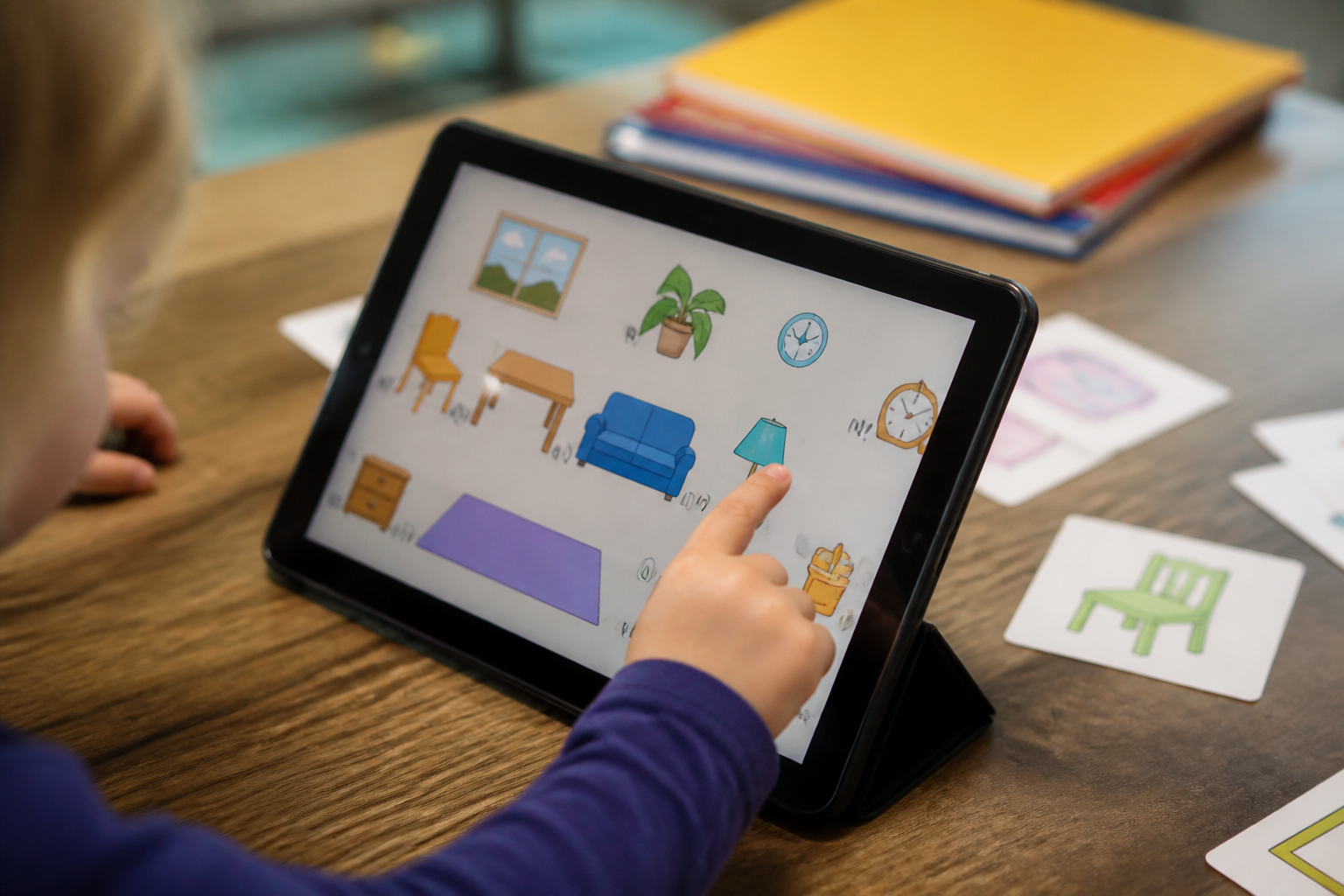
On an iPhone or iPad, a well-made beginner French app can do something a printed page can’t. It can repeat a word 12 times without feeling repetitive, answer a tap with instant feedback, and keep a non-reader moving through practice by sound and picture alone (which is a huge deal at ages 2 to 8). But parents still have to sort the good from the noisy. Does the app build real vocabulary, or does it just reward random tapping? That question matters more right now, because families aren’t just looking for screen time anymore — they’re looking for proof that screen time is pulling its weight.
Why parents searching best children french language iOS apps want more than worksheets
At 7:15 p.m., a four-year-old is sliding a worksheet off the kitchen table while a parent reaches for the iPhone. That small switch matters. Parents looking at best children french language ios apps usually aren’t chasing more screen time; they’re trying to find a way for French learning to hold attention for eight minutes instead of eighty seconds.
What paper drills miss for ages 2-8 learning first French words
Paper drills ask young children to do grown-up school tasks too early. For ages 2-8, first-word learning sticks better through sound, repetition, and quick feedback—not silent tracing. A child can circle a photo of chat on paper and still not say it out loud.
- Ages 2-4: need hearing and pointing before writing
- Ages 5-6: can match words to animation and icon cues
- Ages 7-8: start taking more from simple review and recall play
Why iPhone and iPad app play fits short attention spans better
Short bursts win. On iphone or ipad, a lesson can run for 3 to 5 minutes—and that’s often enough for a beginner. In practice, tap-hear-repeat play feels lighter than drills, and parents can see fast if a child wants to keep going (or is done).
How commercial search intent shows parents are ready to compare before they download
Search terms tell the story. A parent typing app, free, apple, or android into google isn’t casually browsing; they’re comparing before anything gets installed. The honest answer is that they want three things fast:
- Age fit
- Clear French speaking practice
- Safe, simple use on iOS
That’s why worksheets lose ground. Parents don’t want more paper. They want something that works—quickly, clearly, and without a fight.
What the best children french language iOS apps teach in early vocabulary practice
Paper drills don’t build early French fast enough.
For ages 2 to 8, the best children french language ios apps work because they match how young brains learn: repeated listening, quick recall, and playful response on an iphone or ipad. In practice, a child learns more from hearing bonjour 20 times across short game rounds—then saying it back—than from filling one tracing page. That’s why parents comparing each best children french language ios app should watch the learning loop, not just the icon in the Apple store.
French words and phrases young children learn fastest through repeated listening
Early learners pick up high-frequency words first (not random theme lists). The best children french language ios apps usually start with:
- Greetings: bonjour, salut, au revoir
- Everyday nouns: chat, chien, pomme
- Action words: mange, saute, dors
- Short phrases: merci, s’il te plaît, j’aime
Short bursts matter. Five minutes, four times a week, beats one 30-minute session.
Pronunciation, listening, and speaking practice on iPhone matter more than tracing pages
Sound comes first. A beginner doesn’t learn French by editing letters on a page; the child learns by hearing clean audio, matching sounds, and speaking aloud—again and again. That’s the part paper misses. Fast taps alone miss it too.
Why beginner French app design should work even before a child can read
Good app design lets a pre-reader learn without adult rescue (that’s a huge filter). Look for three signs:
- Audio-led tasks through clear visuals
- One-tap answers on iphone and ipad
- Short rounds with instant feedback
Would a 4-year-old know what to do without reading menus?
If not, it isn’t beginner-friendly. And if an app feels like office productivity software—too much text, too little spoken French—it won’t stick.
Which app features matter most in the best children french language iOS apps
What should a parent actually check before installing one of the best children french language iOS apps on an iPhone or iPad?
Ad-free play, privacy, and kid-safe design parents should check before install
Start with the boring stuff—because it matters. If an app is free to download, parents should check for ads, outside links, and data collection before a child starts tapping. For ages 2–8, the best children french language iOS apps keep play simple, keep privacy clear, and don’t push kids into pop-ups or random App Store detours.
Ratings, reviews, and App Store signals that actually help parents judge quality
Star ratings help, but they don’t tell the whole story. Parents should read the newest reviews, scan update notes, and look for signs that the app is still running well on current Apple devices—not sitting untouched since last year. A useful shortcut is comparing best rated kids french language ios apps and checking whether reviews mention real learning, not just cute animation or a nice icon.
Progress reports, multi-child profiles, and short lesson structure for home routines
Short lessons win. A 5- to 8-minute session fits real family time far better than a 20-minute drill, and separate child profiles stop one sibling from wiping another’s progress.
- Look for: quick activities, repeat practice, clear topic order
- Helpful bonus: reports that show completed lessons
Free trial vs free download: what parents should look for before paying
Free isn’t always free. Some apps give a real trial; others offer a tiny sample, then lock nearly everything after install—annoying, and parents know it. Before paying, they should check what the free version includes, how billing starts, and whether the child can actually learn French before the paywall shows up.
How the best children french language iOS apps beat paper drills for real recall
Children forget about half of new words within a day if they only see them once, — that gap explains why the best children french language iOS apps often beat paper drills for early recall. On an iphone or ipad, a child can hear, tap, repeat, and retry a word in under 20 seconds — that’s a very different kind of learning from one worksheet done on Sunday and ignored by Tuesday.
Fast repetition on ipad builds vocabulary better than once-a-week worksheet time
Short bursts win. Five minutes on an ipad, four days a week, usually gives a young child 40 to 60 chances to hear and say the same French words again. That’s more useful than a single paper page, because recall grows through tight repetition, not just exposure. For parents comparing apps, studycat french is one example of a child-first format that keeps practice moving without long reading demands.
Game feedback keeps children taking turns, speaking aloud, and staying with the lesson
Paper can’t answer back. Good apps can — and that matters. When a child taps the wrong icon, hears the right word, and tries again, the lesson keeps going instead of stalling. In practice, the best children french language iOS apps keep children taking turns, speaking aloud, and staying with the task.
- Instant feedback fixes errors fast
- Short rounds suit ages 2 to 8
- Clear audio helps children learn French sounds early
Why touch, sound, and animation help French words stick longer
More senses. Better memory. Touch, sound, and animation work together — not as fluff, but as memory hooks (especially for pre-readers). A child who taps chat, hears it, and sees simple animation is more likely to remember it later than a child who only circles a printed word on paper.
How to choose the best children french language iOS app for your child this week
Parents often think the flashiest app wins.
Wrong. The best children french language iOS apps usually look simpler, because young kids learn through repetition, clear audio, and play that stays on-task—not through endless tapping on every bright icon on an iphone or ipad.
Best fit for toddlers, preschoolers, and ages 6-8 starting beginner French
Age fit matters more than star ratings. A toddler needs short rounds, big visual cues, and spoken prompts; a preschooler can handle matching, listening, and repeating; ages 6–8 can start light word recall, simple phrases, and progress tracking (without turning it into office work on an apple device).
- Ages 2–3: 2-minute activities, songs, simple animation
- Ages 4–5: repeat-after-me games, category vocabulary, clear audio
- Ages 6–8: beginner phrase practice, review loops, saved progress
For parents comparing a french for kids app, the honest test is whether the child asks to play again—and can say 5 to 10 new French words by the end of the week.
Signs an app will help your child learn French instead of just tapping icons
Some apps look busy but teach very little.
Realistically, strong apps let kids hear, repeat, — reuse words in context—not just tap pictures like a simulator.
- Good sign: spoken French appears all through the lesson
- Bad sign: too much menu-hunting, editing avatars, or random digital rewards
- Good sign: review comes back after a few minutes—then again later
A simple App Store checklist for parents comparing French learning apps on apple devices
- Check if the app teaches speaking, not just matching.
- See if it works for beginner learning without reading.
- Look at privacy notes before any download.
- Test one lesson. If the child drifts off in 60 seconds, skip it.
Frequently Asked Questions
What is the 80/20 rule in French?
For young learners, the 80/20 idea means a child gets the biggest early payoff from a small set of high-frequency French words and phrases. The best children French language iOS apps on iPhone or iPad usually teach greetings, colors, numbers, food, animals, and simple verbs first because that core set gives children more chances to hear, repeat, and remember what they learn.
What is the best free app to learn French on iPhone?
If a parent wants a free starting point, the best option is usually an app that offers a limited free version or trial instead of promising endless free content. For preschool and early elementary ages, the better choice is a French app for kids that fits child development—short activities, clear speech, strong visuals, and no reading load—rather than an app built for teens or adults using an iPhone.
Is there Duolingo for kids French?
Parents often ask this as shorthand for “Is there a simple French app my child can use alone?” The honest answer is that young children do better with apps made for ages 2-8, with play-based learning, big touch targets, and spoken guidance on iPad or iPhone, instead of apps that feel like stripped-down school drills.
Is there a better app to learn French than Duolingo?
For a 3-year-old or 6-year-old, yes. A better children’s French app focuses less on streak-style pressure and more on listening, repeating, and playful review—because kids this young learn through rhythm, images, and repetition, not by racing through lessons.
What should parents look for in the best children French language iOS apps?
Start with age fit. The strongest apps for iPhone and iPad keep sessions short, teach through play, include spoken French from the first screen, and let children make progress without needing to read directions (that part matters more than flashy animation). Parents should also check privacy, ad-free design, and whether the app shows real learning progress instead of just screen activity.
Can a child really learn French from an iPad app?
Yes—but only if the app gets one thing right: active use. Children learn more from apps that ask them to listen, choose, repeat, and reuse words in context than from apps that turn French into passive tapping. Screen time can teach. Bad screen time doesn’t.
At what age can children start using a French learning app on Apple devices?
Most children can start around age 2 or 3 if the app is built for pre-readers and keeps activities simple. On an Apple device like an iPhone or iPad, that means large icons, spoken prompts, and game play that doesn’t depend on menus, editing settings, or adult help every minute.
Are free French apps good enough for beginners?
Sometimes for sampling, not always for staying power. Free apps can help a parent test interest, but the best children French language iOS apps usually put the stronger lesson flow, fuller content, and better progress tools inside paid access or a free trial, which tends to matter once a child moves past the first week.
How much time should a child spend with a French app each day?
Less than most parents think. For ages 2-8, about 10 to 15 minutes a day on iPhone or iPad is often enough if the app repeats words well and keeps children speaking, singing, or matching meaning to sound—short bursts work better than one long session that turns into drift and guessing.
Should parents choose an app that teaches only French or one with other languages too?
A multi-language app isn’t a problem if the French path is clear and age-appropriate. Some families like having French, German, or Chinese in one publisher’s line because the design stays familiar across apps, but the real test is whether the French content feels built for beginners and keeps the child’s attention after the first download.
Paper drills still have a place on the kitchen table, — they rarely win the part that matters most for ages 2 to 8: getting a child to hear a French word, say it back, and remember it tomorrow. That’s where the best children french language ios apps pull ahead. They turn short bursts of attention into repeated listening, touch-based response, and spoken practice—all three matter more than another traced vocabulary sheet sitting unfinished by snack time.
Parents also need to judge the app, not just the promise. An app should work before a child can read, keep sessions short, and show clear signs of quality—strong reviews, safe design, useful progress tracking, and a trial that lets families test fit before paying. If a child only taps random icons, the app isn’t teaching much. If the child starts recognizing and repeating words after a few sessions, that’s the signal to trust.
The next step is simple: open the App Store, compare three French apps side by side on an iPhone or iPad, and check for age fit, ad-free play, spoken-word practice, and short lesson design before downloading.
For more, check out Is an icy strait bald eagle tour worth booking for one port day?.