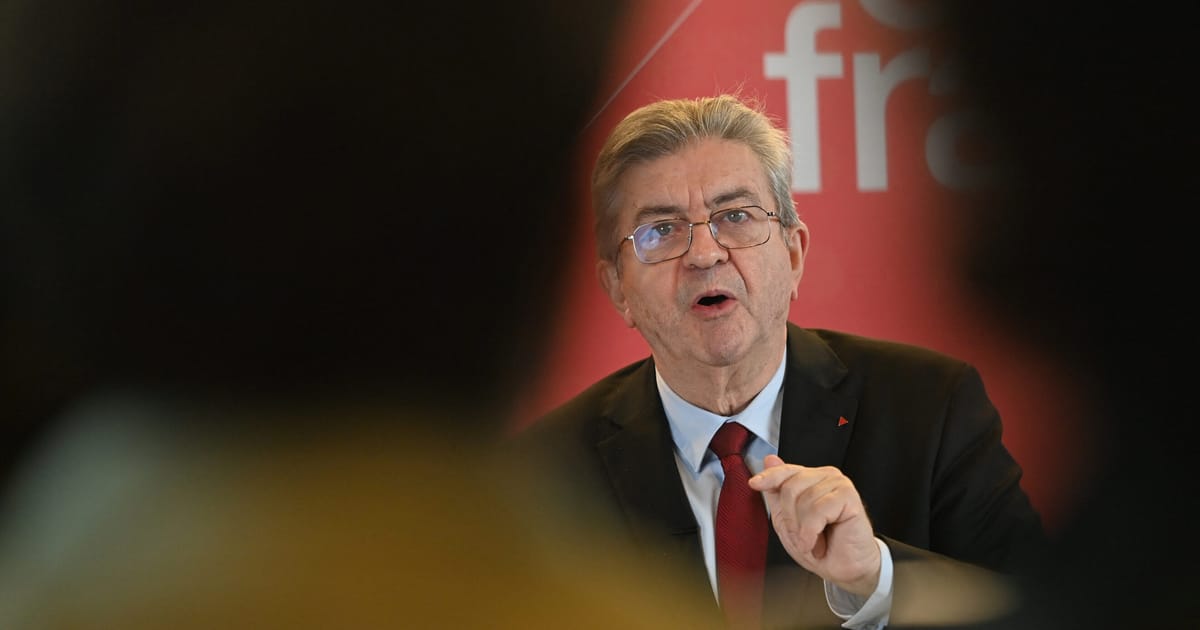
“We think there is a very strong German influence [in Europe], with an ordoliberal vision that we strongly reject,” Taché said. Concerns about hybrid warfare by Russia “don’t justify recreating a Wehrmacht as Europe’s leading military power,” Taché said, using the German word for Nazis’ armed forces.
Germany jitters
While Mélenchon has taken his antipathy toward Berlin further than any other leading French politician, doubts around the Franco-German relationship aren’t limited to the far end of the political spectrum.
In a November poll conducted by the French branch of the European think tank More in Common, 71% of respondents described Germany as an ally. While that was more than any other international partner, it was down 6 percentage points from last year, led by a sharp drop among conservatives, traditionally among the most pro-German part of the electorate.
Even mainstream French politicians have begun to temper their enthusiasm for Franco-German industrial cooperation after Germany decided unilaterally to pull the plug on a joint effort to design and build a next-generation fighter jet and in the face of cooled support by Berlin for a similar project for tanks.
Leading center-right candidates such as Edouard Philippe, a German speaker, have said that Paris should look beyond Berlin to form new partnerships and beef up its security. Le Pen, who has long shared Mélenchon’s defiance, said on Thursday she wanted to end the era of “German Europe.”
“German rearmament strikes a chord historically for many voters,” said Paul Maurice, an expert on Franco-German relations at the French Institute of International Relations. “It speaks to the collective psyche.”