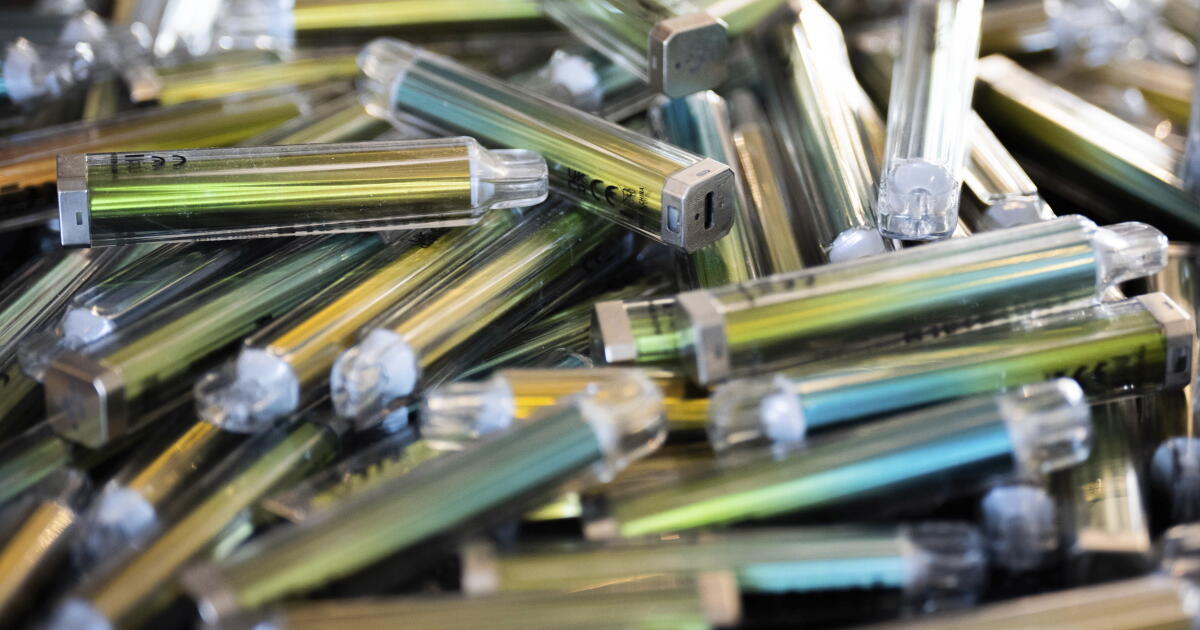
Vape pens and other disposable e-cigarettes soon could be illegal in California.
On Wednesday, the state assembly approved Assembly Bill 762, which, if signed by Gov. Gavin Newsom, will make the battery-powered disposable devices illegal to manufacture, distribute or sell in the state. The bill passed the senate Tuesday.
“We are hopeful the Governor will recognize the threat these devices pose to our communities and that the costs of cleaning up the mess these devices leave are borne by ratepayers,” the bill’s sponsor, Assemblywoman Jacqui Irwin (D-Thousand Oaks), said in a press release.
The bill targets single-use, battery-embedded electronic cigarettes containing tobacco products. Cannabis devices are exempt. To be legal under the new law, a vaping device must be both refillable (or use replaceable pods) and have a rechargeable battery.
Vapes have become a trash plague on streets and beaches and in parks where they leak toxic chemicals such as lead, lithium, cobalt, cadmium, chromium, copper, zinc and nickel as well as microplastics and battery acid.
According to CalPIRG, 500,000 disposable vapes are thrown away every day in the U.S. That’s one every 5.7 seconds.
Vapes use a small, lithium battery to heat liquids such as nicotine for users to inhale. Disposable vapes can be used only a few times before they become useless and have to be discarded.
The vaping industry says the technology saves lives and the cartridges are not nearly as bad a blight as cigarette butts.
Neither the Vapor Technology Assn., the largest industry trade group, nor the American Vapor Manufacturers, an industry group representing independent vapor manufacturers, could be reached for comment.
However, in comments last spring, a spokesman for the vapor manufacturers, Jim McCarthy, said: “Vaping is the single most popular and effective method for Americans to quit smoking cigarettes, and it’s an absolute outrage that states like California are trying to deprive ordinary people of that life-saving product, and no state has driven more people back to combustible cigarettes than California has.”
Research shows while vaping helps more people stop smoking than conventional methods like patches or gum, it is dangerous for youths, young adults and people who don’t already smoke, since the long-term effects remain unknown. The devices deliver addictive nicotine, and the vapors can cause lung and throat irritation. Long-term use is linked to blood vessel and cardiovascular impairment.
They also are a growing cause of fires in waste facilities. Industry analysts have coined the term “the vape effect” to describe this rise in fires, estimating billions of dollars in cumulative damages to the global waste management infrastructure.
When disposable vape cartridges are put in garbage or recycling bins, they can be crushed by garbage trucks and sorting equipment at waste facilities. This can puncture the batteries that cause them to short-circuit, overheat and potentially ignite surrounding materials.
The National Waste & Recycling Assn. (NWRA) and Resource Recycling Systems estimate that more than 5,000 fires occur annually at recycling facilities, driven heavily by lithium-ion batteries.
“We don’t let other industries design products with embedded fire hazards and walk away when they fail. Vape companies shouldn’t get a pass either,” said Tony Hackett, a policy associate at Californians Against Waste.
According to the Taxpayers Protection Alliance, a national group that advocates for reduced government spending, roughly 2.2 million adults used electronic vapor products across the state in 2022 — a 40.4% increase from the year before.
The California Youth Tobacco Survey found that in 2023, vapes were the most prevalent tobacco product among high school students. It reported that 10% of students in rural areas vape and 6% in nonrural areas.