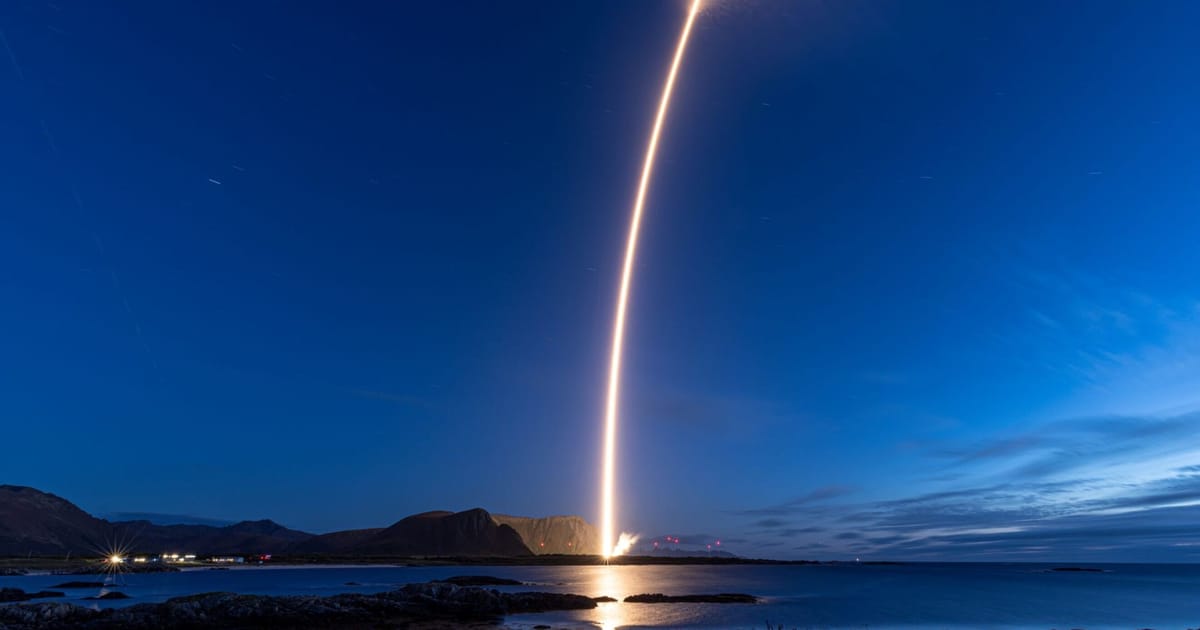
We made history. On just our second flight, we became the first commercial space company from Europe to deliver satellites into orbit. Mission ‘Onward and Upward’ successfully lifted off and deployed payloads into orbit. A new chapter for European spaceflight. More:… pic.twitter.com/AWvqG2l8Mn
— Isar Aerospace (@isaraerospace) September 5, 2026
Germany’s Ministry for Research, Technology and Space hailed the launch as a “milestone that impressively demonstrates our country’s innovative strength and technical expertise.”
Europe is trying to reduce its reliance on non-European launch providers, particularly Elon Musk’s SpaceX. German Chancellor Friedrich Merz visited the Norwegian launch site in March and warned Europe has been “dependent on other supply chains and other countries in the world for far too long.”
The two-day International Space Summit will be held in Paris on Wednesday and Thursday with delegations from more than 120 countries. European Commission President Ursula von der Leyen is set to give her first speech solely about space policy, as the Commission prepares to unveil its European Space Shield, an action plan aimed at protecting the bloc’s satellites.
U.S. President Donald Trump’s administration is discouraging American companies from attending the conference.
Isar’s first launch, in March last year, ended with the rocket crashing into the sea shortly after liftoff.
Calling Saturday night’s successful launch “historic,” European Space Agency Director General Josef Aschbacher said it was “yet another step towards a more diverse autonomous European launch service sector.”
Isar is one of several European startups seeking to break into the orbital launch market, alongside Spain’s PLD Space and France’s MaiaSpace. Arianespace, a Paris-headquartered company, has long operated from France’s overseas territory of French Guiana.
Based near Munich, Isar plans to move toward serial production of its Spectrum rocket, with a target of manufacturing over 30 a year, and is developing a second launch site in Canada.