Employee expectations have shifted over the past decade, particularly among the younger generations now entering the workforce.
Since the pandemic, boards across the UK have spent the years weighing incentives against mandates, trying to coax people back into the office without making it feel like a penalty. What employers want from the workplace, and what employees want from it, are still not always aligned. Around four in ten UK workers now spend at least part of their week working from home, while absence has climbed to its highest level in over a decade, exceeding nine working days per employee per year according to the CIPD. Building somewhere people genuinely want to be has moved beyond salary, benefits and policies alone. Companies serious about attracting and retaining talent are now competing across a broader set of expectations, and food has become part of that equation. Now, workplace corporate catering sits firmly within conversations that keep HR leaders awake at night: employee experience, culture, recruitment and the golden goose: retention. In response to changing employee behaviours and expectations, a growing number of organisations have stopped treating food as a perk and started treating it as a performance lever.
On the face of it, the logic is straightforward. Good nutrition supports energy, focus and productivity. Dig a little deeper, however, and food is doing what it has always done best: bringing people together to connect, collaborate and build relationships. The wider food industry has recognised this shift and responded accordingly, with fresh examples of what workplace dining can look like when approached strategically. This thinking underpins the way two businesses approach workplace dining from different angles: Fooditude and The Good Eating Company.
Fooditude provides delivered catering for offices without on-site kitchens, while GEC operates a fully staffed workplace onsite catering service for larger sites. Farzana Miah, Head of Marketing, shared why an innovative approach to corporate catering matters in today’s climate, at a time when employers are placing greater emphasis on authentic culture and employee wellbeing: “Employees today have genuinely high expectations when it comes to dining, and rightly so,” she says. “With the incredible restaurants, street food markets and culinary experiences on their doorstep, especially in London, the workplace also needs to compete.”
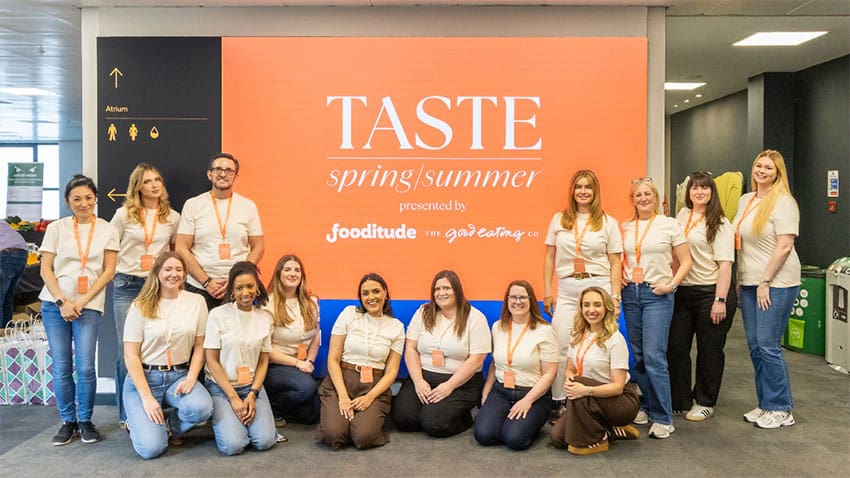
The Good Eating Company and Fooditude recently celebrated the launch of the TASTE Spring Summer Food Innovation Forum at London’s Business Design Centre, where eight new food and drink concepts were presented exactly as they would be served in the workplace as part of onsite catering services. “For us, it was a showcase of what’s possible when brands are genuinely led by customer insight, allowing that insight to drive innovation that can raise the bar for workplace hospitality moving forward,” says Miah.
Among the concepts showcased was Smoking Barrel, featuring premium cuts of meat, cornbread and house-made sides; the kind of meal people actively look forward to rather than simply tolerate. Fooditude introduced three concepts of its own: Galli Social, inspired by Indian street food; Bun Cho, influenced by Vietnamese market cooking; and Function, which builds dishes around ingredients selected for energy and focus as much as flavour. The latter reflects the growing trend towards functional nutrition, where food is increasingly judged not only by how it tastes, but by how it makes people feel hours later. Alongside the new launches, GEC also highlighted its Sustainable Diets initiative. Rather than removing options or relying on messaging alone, the programme uses menu design and placement to make lower-impact choices easier for employees. The goal is simple: make the preferred option the easiest option. Those commitments, however, are only as strong as the supply chain behind them. The forum brought together more than 20 local suppliers, highlighting the growing importance of sourcing transparency as employees become increasingly interested in provenance and environmental impact. Sustainability messaging quickly falls apart if organisations cannot demonstrate where their food comes from.
After the lunch rush, what remains is the realisation that workplace food innovation is about far more than food. The environment people work in shapes how engaged, connected and supported they feel, and food is one of the parts of that environment employees interact with most often. The employee dining experience, particularly through shared meals and communal spaces, creates opportunities for the spontaneous conversations that help strengthen workplace culture. As organisations continue to rethink the purpose of the office, food has become one of the simplest and most effective ways to create genuine connection rather than simply bringing people into the same building. Forward-thinking employers have already started to recognise that reality. The organisations leading the way are no longer asking what food they should serve, but what role delicious, healthy and seasonal food can play in creating a workplace people genuinely want to be part of.


