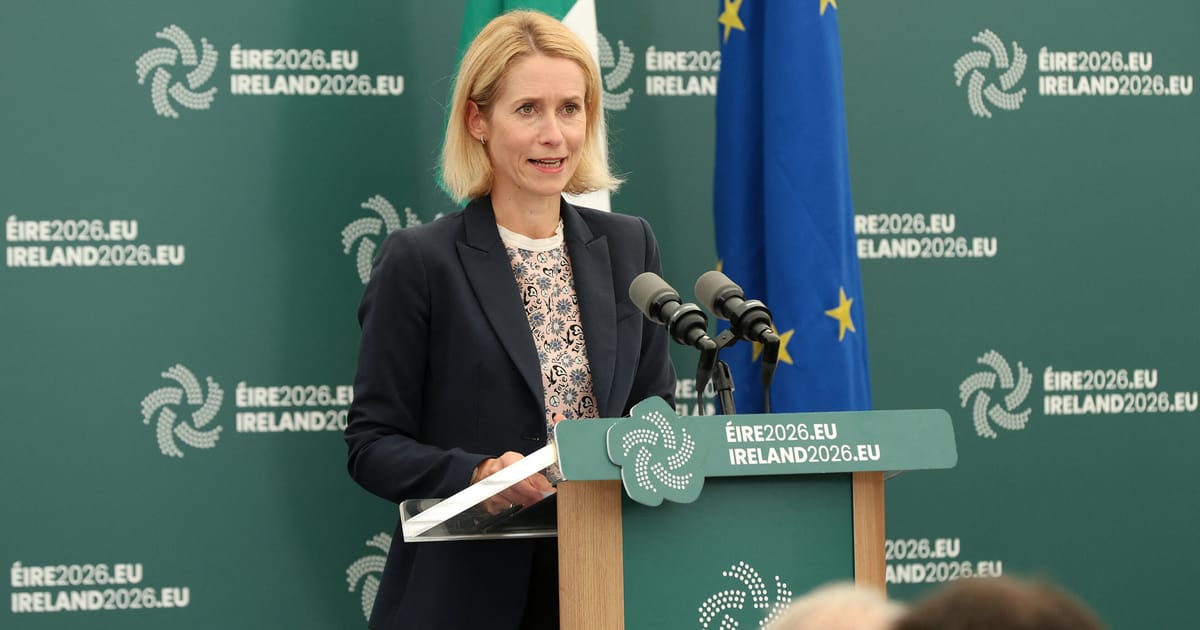
“The problem is not the treaties, the institutional setup,” Kallas told a news conference. “The problem is the implementation.”
Debate over the future of EU foreign policy — and the fate of the EEAS — is intensifying amid budget constraints and criticism that it is no longer fit for purpose in an era of increasingly brutal relations between global powers.
Meanwhile, the European Commission’s growing interest in foreign policy, including the creation of a unit dedicated to the Middle East and Africa, has sparked a turf war with Kallas’s EEAS.
The Franco-German paper, among other ideas, proposed addressing this issue by giving Kallas oversight of external-facing policy units within the Commission, including migration, trade and development aid.
Kallas pushed back, arguing that EU treaties and legal texts already gave her this responsibility in theory — but were not properly enforced.
Kallas’s role sits astride the Commission, where she is a vice president under President Ursula von der Leyen, and the European Council where she is tasked with coordinating the foreign policy positions of 27 EU states.