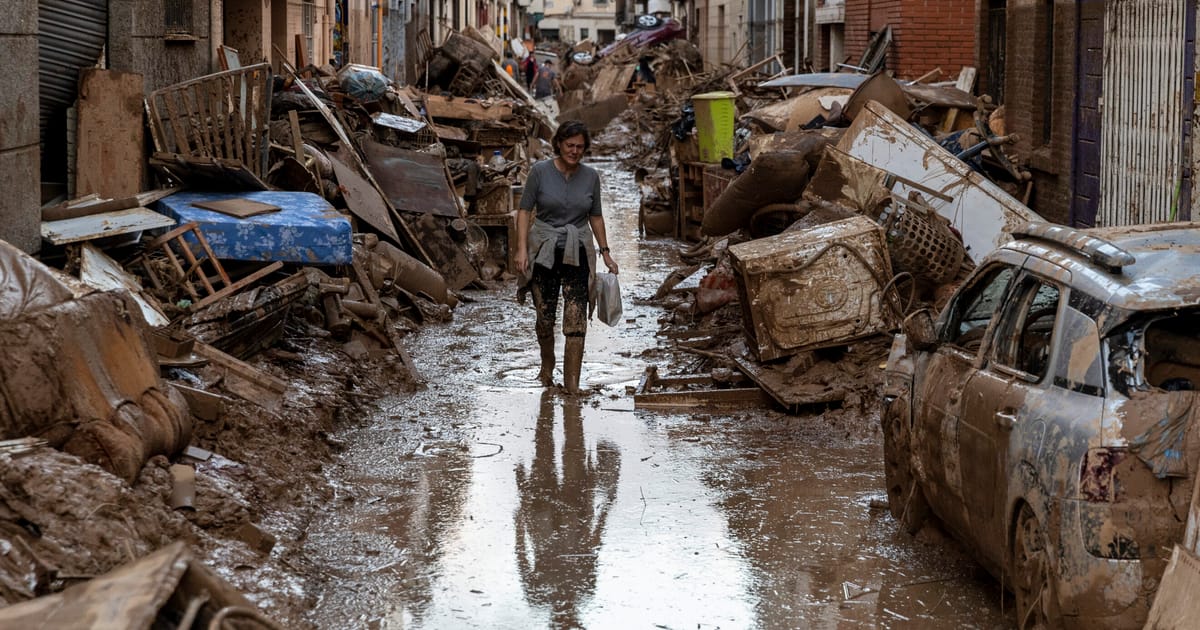
But Spanish courts exonerated both national authorities and Ribera, noting the regional government was the only entity authorized to manage the crisis. After being denounced as an “assassin” by victims’ relatives one year on, Mazón finally stepped down.
His successor, Pérez Llorca, took office promising to rebuild the region and leave it better prepared for future disasters. Yet key climate-protection measures have been further weakened since the floods.
Weeks after the disaster, the government pressed ahead with legislative changes to allow construction closer to shorelines. More recently, other controversial proposals have surfaced, including a plan to build more than 1,200 homes on farmland that critics say is instrumental to absorbing water during torrential rainstorms.
In an interview, Raúl Mérida, the technocrat appointed to oversee the region’s recovery, defended its reconstruction and adaptation efforts while playing down the significance of the Valencian government’s climate-skeptic statements.
“Our actions are based on science,” he said, adding that politicians across the political spectrum had backed his proposals to build floodable parks and carry out environmentally conscious river-restoration schemes that aim to better protect communities against future storms.
According to Mérida, 98% of infrastructure damaged in the disaster has been rebuilt. But he acknowledged that rebuilding did not necessarily mean the region was now better protected against flooding.