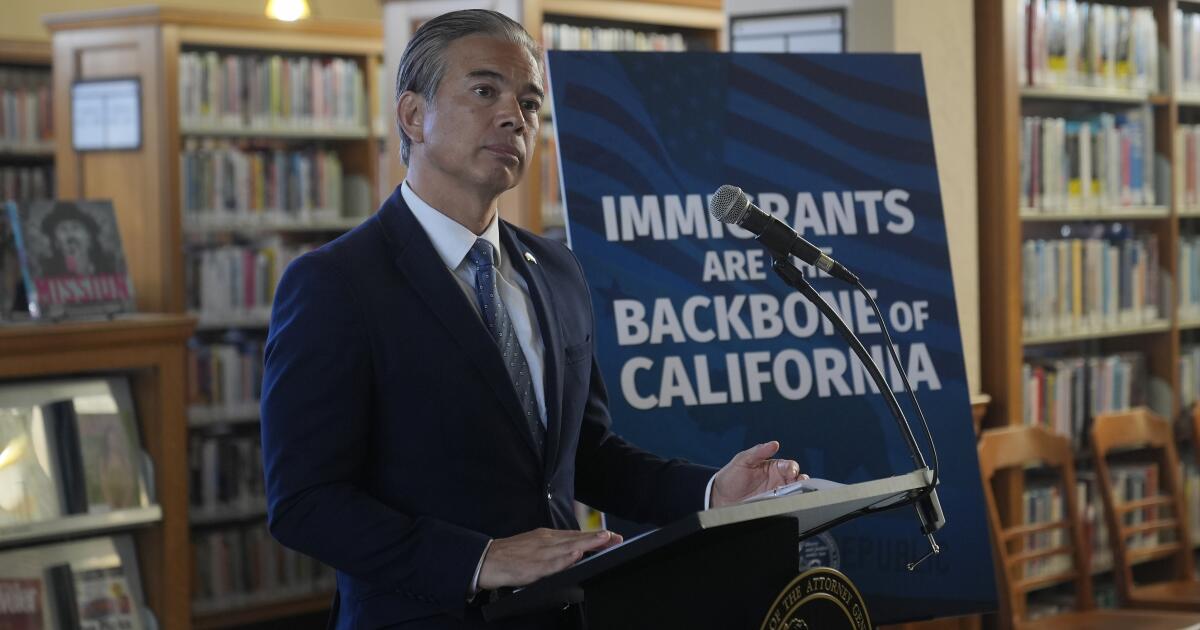
WASHINGTON — The Trump administration is proposing a new rule that would strip private schools and colleges of their tax-exempt status if they provide targeted help to students based on their race, a significant escalation in the White House’s campaign to eradicate diversity programs directed at Black, Latino and other minority students.
The Treasury Department proposed the change Thursday in a new regulation that, if made final, would take effect after May 2027. The rule is broadly aimed at ending any policies or programs that help students because of their race, and it specifically says such benefits in admissions, scholarships and facilities “would be incompatible” with the rule.
It’s the latest attempt by the Trump administration to pressure schools and colleges to end diversity, equity and inclusion policies that had become common before President Trump returned to the White House with a promise to eliminate them. Trump officials have used civil rights-era laws to unwind the policies, saying they discriminate against white and Asian American students.
The Treasury Department and the Internal Revenue Service estimate that up to 18,000 private schools, colleges and other educational institutions nationwide could be affected by the proposal.
In California, the proposed changes would cover the more than 85 nonprofit colleges and universities that belong to the Assn. of Independent California Colleges and Universities, among them Stanford and USC. The proposed rule also affects private K-12 schools.
Steven Bloom, assistant vice president of government relations at the American Council on Education, which represents colleges and universities, said he expects colleges to change course long before enforcement of the federal rules.
“I think it will have a chilling effect on the behavior of folks on campus,” he said. “There aren’t a lot of institutions that have the resources to litigate these matters.”
Assn. of Independent California Colleges and Universities President Kristen Soares said the group was “reviewing the proposed IRS regulations and their potential impact,” adding that “our institutions are committed to complying with applicable civil rights laws.”
“The proposed rule may create significant new compliance burdens and legal uncertainty for institutions already operating in accordance with existing nondiscrimination requirements…,” the statement said. “AICCU will work vigorously to protect this status, preserve the diverse missions of our institutions, and ensure they can continue expanding opportunity for students from all backgrounds.”
Representatives from USC, Stanford and Occidental College did not respond to requests for comment. A spokesperson for Pomona College declined to comment.
The proposal would not affect the University of California, California State University or the state’s community colleges because they are public institutions.
But California’s public higher education systems have been targeted in the administration’s wider campaign against race-related programs. Since last year, federal agencies have investigated UC admissions and hiring, demanded nearly $1.2 billion from UCLA in part over allegations of use of race in admissions — which UC denies. The administration also ended grants that sent tens of millions of dollars a year to Cal State and community college campuses that provide academic and mentoring support that serve a high percentage of Latino students.
Nationally, scores of universities have shut down or rebranded their diversity, equity and inclusion offices and ended scholarships and clubs designed for minority students under pressure from the White House. In a statement announcing the proposal, Treasury Secretary Scott Bessent suggested that even policies that are no longer under the banner of DEI could be targeted.
“Schools rebranding race-based preferences as equitable, inclusive, or diversity-enhancing does not change their discriminatory nature,” Bessent said.
Todd Wolfson, president of the American Assn. of University Professors, a group that has previously sued the Trump administration on behalf of UC workers, criticized the federal moves.
“Weaponizing the IRS to attack colleges and universities that uphold and expand civil rights is outrageous,” Wolfson said.
Although California campuses have taken fewer measures to reduce diversity measures than those in red states, federal and legal pressure has still hit the state’s schools. Within weeks of a Feb. 14, 2025, Education Department letter threatening schools’ funding over race-related programs — such as themed dorm room floors, graduation ceremonies and scholarships — USC closed its freestanding diversity office website and folded it into a culture team.
In March 2025, UC regents ended a requirement that faculty applicants submit diversity statements. In October, a private foundation rebranded the Black Alumni Scholarship Fund at UC San Diego to make it open to students of any race after a right-leaning nonprofit sued over it. More broadly, campus programs to support the academic success of Latino and Black students have also been cut down at some UC campuses, though administrators have blamed budget cuts for the drawdowns.
Why private schools are under scrutiny
America’s private universities have been exempt from many taxes for more than a century because they provide a public good. The benefit saves many universities millions of dollars every year.
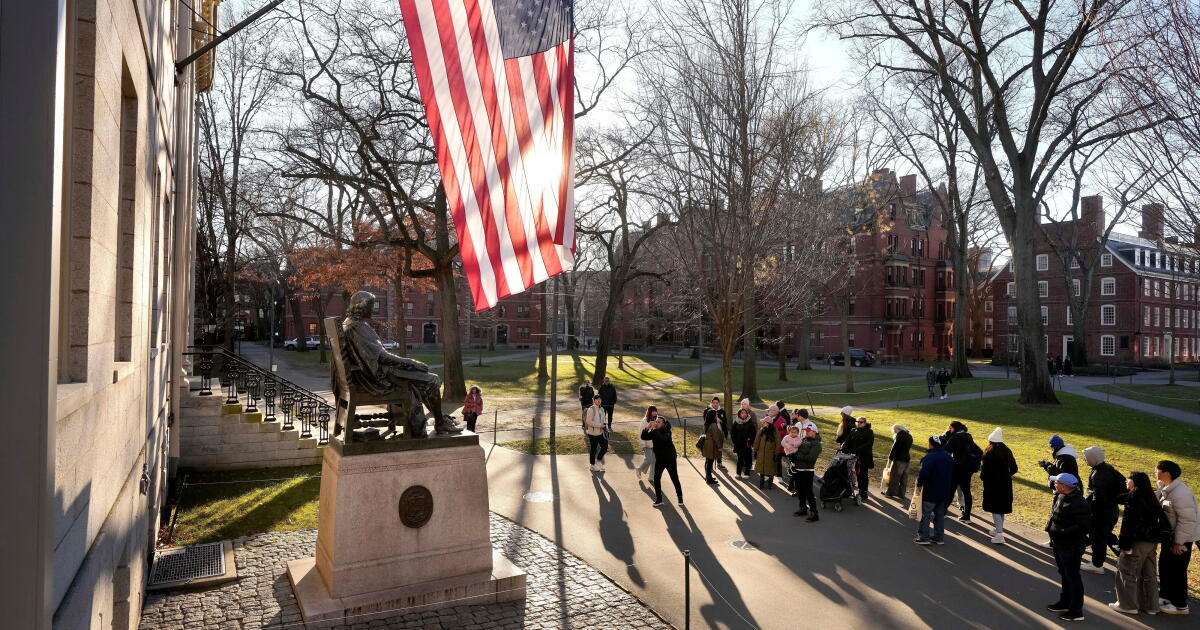
Trump has seen the tax-exempt status as a lever to pull in his pressure campaign against colleges that he describes as bastions of “wokeness.” He threatened to cut the benefit for Harvard University last year during his battle with the nation’s oldest college. In a response, Harvard officials said there was no legal basis for doing so and argued it would force cuts to financial aid and crucial medical research.
In California, the administration first has focused on pulling back research funds at campuses. In August 2025, it froze $584 million in UCLA funding and demanded nearly $1.2 billion over allegations involving race in admissions and antisemitism allegations. A judge blocked much of the demand in November. The government dropped an appeal in February.
The Justice Department has separately opened investigations into UCLA, UC San Diego and Stanford medical schools, accusing them of favoring Black and Latino students in admissions. Trump officials say any such favoritism violate the Civil Rights Act of 1964, a federal law that forbids discrimination in education and other public places and was created to fight segregation and its effect.
It’s incredibly rare for the federal government to go after a college’s tax-exempt status, but there’s one notable precedent. Bob Jones University, a small Christian school in South Carolina, lost the benefit in the 1970s over a ban on interracial dating and marriage on campus. The Supreme Court upheld the IRS’ decision to deny the school its exemption. The school has since ended the ban and regained tax-exempt status in 2017.
Laws forbid the IRS to target individuals and organizations for ideological reasons, and federal officials are not allowed to direct IRS investigations.
Bloom said the rule on its face adds little to existing law.
“It’s been unlawful to engage in discrimination under Title VI in educational opportunities for decades,” he said. “The challenge is that the rule in the way it’s written creates huge avenues for potential misuse. In hands of a normal administration, we might not be worried.”
To maintain nonprofit status, which allows donations to be tax-deductible, organizations must follow IRS rules on lobbying, political campaign activity and annual reporting requirements, as well as other obligations.
Trump says new rules would restore merit
The Trump administration describes the new proposal as a move toward restoring merit in the nation’s education systems.
A statement from IRS Chief Executive Frank Bisignano said private schools that promote discriminatory practices will no longer be exempt from taxes.
“Today’s proposed regulations put institutions on notice and schools that continue to engage in racial discrimination should expect to lose that status,” he said.
Kaleem is a Times staff writer. Binkley writes for the Associated Press. AP writer Annie Ma contributed to this report.